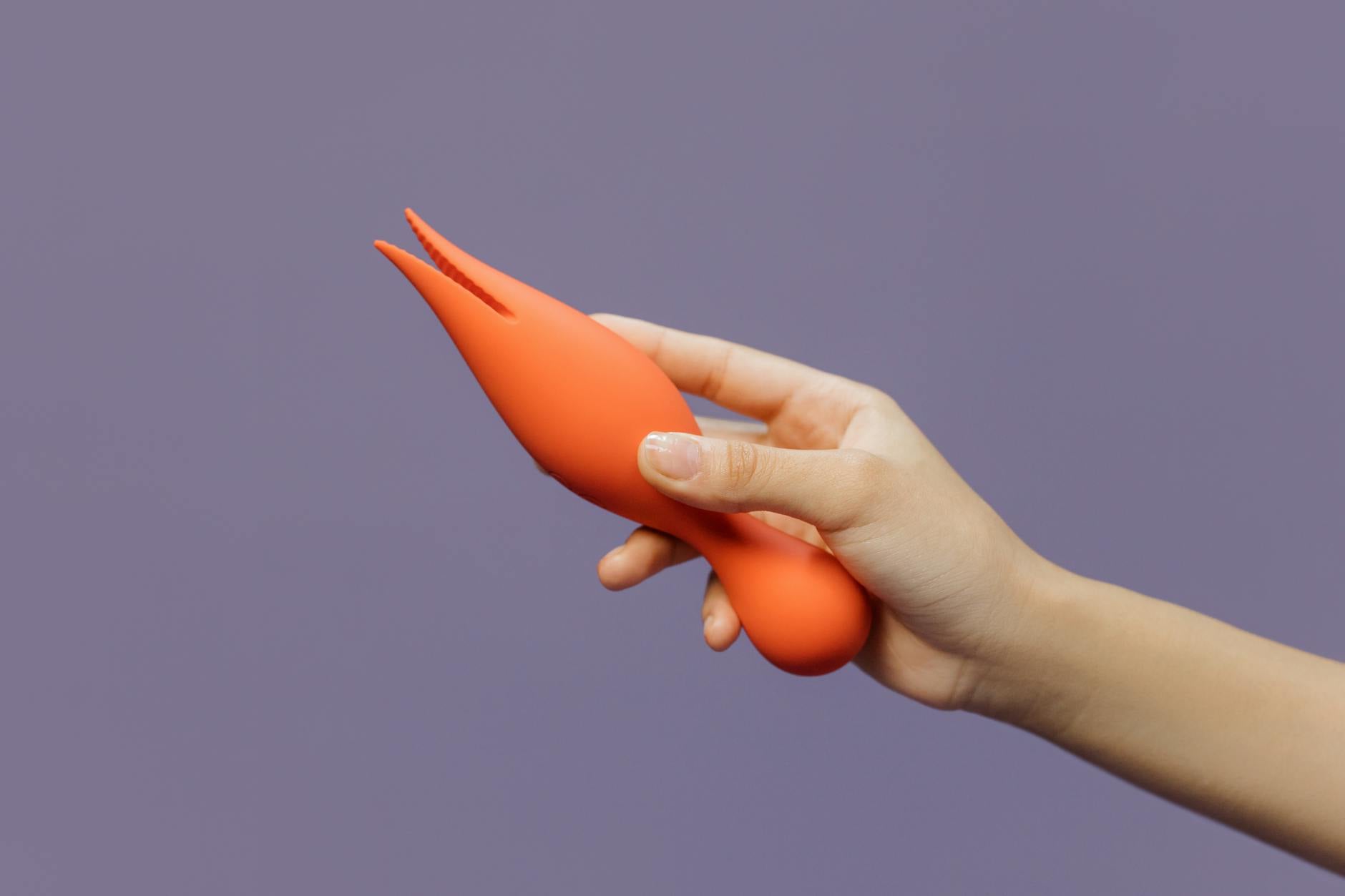
When stress becomes the third person in your bedroom
You know the feeling. Work fires, family chaos, financial pressure, pandemic hangovers, a partner's illness, your own burnout. The adrenaline and cortisol are spiking. At night, you collapse. Your partner reaches over. And there's nothing there. Not reluctance, exactly. Just... flatness. A blank where desire used to live.
This isn't about the relationship. It's not about attraction. It's about what chronic stress does to the brain's pleasure circuits. And the good news is that it's reversible. The better news is that lemon vibrators rewire those circuits faster than willpower or therapy alone ever can.
How stress erases desire at the neurochemical level
When you're under sustained pressure, your body lives in sympathetic activation. That's the nervous system's fight-or-flight mode. In that state, your brain deprioritizes pleasure. Dopamine (the motivation and reward neurotransmitter) gets siphoned toward survival. Cortisol runs high, suppressing both testosterone and estrogen signaling. Blood flow redirects away from the genitals and toward the muscles and heart. Your prefrontal cortex (the part that plans, imagines, anticipates pleasure) goes offline. You're thinking about bills or deadlines, not sensation.
So desire doesn't disappear because you're broken or because the relationship is failing. It disappears because your nervous system is convinced you're in danger. And under genuine threat, arousal is a liability.
The problem is that for many of us, that threat is chronic but not actually life-threatening. Work stress, parenting stress, caregiver stress, financial stress. These fires don't resolve in weeks. They smolder for months or years. And the longer your nervous system camps in that fight-or-flight state, the harder it becomes to access pleasure.
Why lemon clitoral vibrators break the pattern
A lemon vibrator does something that conversation, date nights, or even medication can't do alone. It interrupts the stress-dampened nervous system and redirects activation toward pleasure. Here's how.
It bypasses willpower. You don't have to "get in the mood." The suction stimulation of a lemon vibrator directly activates nerve pathways that have been dormant. Your body doesn't need permission from your stressed-out brain to respond. The sensation is novel and distinct enough to cut through the mental chatter.
It creates a pleasure anchor. When you have an orgasm (especially a strong, novel one delivered by something like the Lem), your brain floods with dopamine, oxytocin, and serotonin. These neurochemicals don't just feel good in the moment. They rebuild your brain's ability to anticipate pleasure. Over time, this rewires desire itself. You start thinking about sex again not because you decided to, but because your nervous system remembers it as safe and rewarding.
It's tactically faster than rebuilding arousal the old way. If stress has flattened your desire, waiting for attraction to build organically can take months. With a clitoral vibrator, many people can reach orgasm in 5-15 minutes, even from a standing start. That speed matters. Repeated experiences of pleasure, even self-directed, reshape the nervous system's baseline faster than occasional partnered sex.
It resets the pelvic floor. Chronic stress keeps the pelvic floor clenched. That tension suppresses sensation and makes arousal feel harder to access. The suction and stimulation of a lemon vibrator relaxes that tension and restores blood flow. You literally unlock the physical structures that make pleasure possible.
Setting up for success when desire is flat
If you're using a lemon vibrator specifically to rebuild desire after stress, a few things change:
Start with zero expectations. The goal is not an orgasm. The goal is to prove to your nervous system that pleasure is still possible. Some days you'll have one. Some days you won't. Both are fine. You're collecting data, not performing.
Timing matters more than you'd think. Don't use a vibrator when you're actively stressed or when cortisol is peaking. Early morning, or after a walk, or right after something that genuinely relaxed you. Your nervous system needs to be at least slightly parasympathetic for the full benefit. If you're vibrating while mentally reviewing your to-do list, you're just adding sensation to stress.
Three to five minutes alone is the baseline. Not because that's all you have, but because setting a short time window removes performance pressure. Curiosity, not completion. Touch yourself without the vibrator first. Notice what your body needs. Then bring in the lem. Many people find that the first few experiences alone are quieter and more restorative than partnered sex would be.
Tell your partner what's happening. Not to invite them in, necessarily, but to name the pattern. "I'm stressed and my body's offline. I'm going to spend some time reconnecting with myself. This isn't about you." This usually defuses the tension that builds when one partner's desire drops.
The cascade of change that follows
When you restart pleasure in the nervous system, desire often rebuilds in stages.
Week one to two. You notice that orgasms are possible again. They might feel different from what you remember. Smaller, more concentrated, easier. That's normal under stress. The point is sensation is returning.
Week three to four. You start anticipating it. Not constantly, but there's a thread of desire where there was none. Maybe you think about it in the shower. Maybe you feel a spark when your partner touches your arm.
Week five to eight. Desire begins to generalize. You're not just interested in the vibrator. You're interested in touch again. In your partner. In the sensations your body can create. The nervous system remembers that pleasure is safe and starts hunting for it.
Month three onward. Many people report that their baseline desire rebounds significantly. Not necessarily to pre-stress levels (life circumstances matter), but to something functional and even joyful. The lemon vibrator becomes a tool rather than a crutch. You use it because you want to, not because desire won't return without it.
This timeline varies wildly. Some people shift in two weeks. Others take three months. The depth of stress matters. Whether the stressor is resolving matters. Whether you're also doing other nervous system work (therapy, exercise, sleep) matters. But the direction is almost always forward.
When stress and relationship damage overlap
Here's where it gets more complex. Sometimes stress flattens desire, but sometimes stress also creates relationship friction. You snap at your partner. You withdraw. They feel rejected. They stop initiating. The distance grows.
In these cases, rebuilding desire alone isn't enough. You also need to rebuild intimacy after relationship disconnect. But the order matters. Start with solo pleasure first. Get your nervous system resourced. Then bring your partner back into the picture. It's much easier to rebuild connection from a place where you've already proven to yourself that pleasure is possible.
If you're rebuilding with a partner after major life stress, the conversation is different. You're not apologizing for low desire. You're inviting them into the process of rebuilding it.
The role of patience (and sometimes professional help)
If your desire has been flat for more than three or four months, and stress reduction or vibrator use isn't shifting it, talk to a therapist or doctor. Sometimes what looks like stress-related flatness is actually depression. Sometimes it's a medication side effect. Sometimes it's a combination of factors that needs a combination of approaches.
A good therapist can also help you understand whether the stress is situational (you're between jobs, or there's a sick parent at home) or relational (the relationship itself is the source of stress). Those require different solutions. A vibrator helps either way, but context matters.
FAQ: Stress, desire, and lemon clitoral vibrators
Can a lemon vibrator really fix stress-related desire loss, or is it just a temporary fix?
Neither, exactly. A lemon vibrator doesn't fix the stress itself, but it does interrupt the neurochemical cascade that stress creates. It gives your brain new data: pleasure is still possible. Over time, repeated pleasure experiences reshape your nervous system's baseline. So it's not temporary, but it also only works as part of a bigger picture. If the stressor is still active and relentless, you'll need to address that too.
How often should I use a lemon vibrator if I'm trying to rebuild desire?
Start with once or twice a week if possible, ideally when you have at least 15 quiet minutes. More frequent is fine if the opportunity exists. The pattern matters more than the frequency. Consistency teaches the nervous system faster than intensity does.
Is it weird to use a vibrator alone when I have a partner?
Not at all. Solo pleasure and partnered pleasure use different neural pathways. Solo time is actually a critical part of rebuilding desire because there's zero performance pressure. You're collecting sensation data. Your partner doesn't need to be involved for this phase to be valuable.
What if my partner feels threatened by me using a lemon vibrator?
That's a conversation worth having, and it's separate from the desire issue. Some partners feel inadequate. Some fear it means you're losing interest in them. Neither is usually true. The clearest framing: "This isn't about you. This is about me reconnecting with my own pleasure so I can be more present with you." If your partner is a secure person and the relationship is solid, this usually lands. If it doesn't, that might be a sign to see a couples therapist.
How long does it take to rebuild desire after stress?
Two to twelve weeks is the typical range. Some people feel the shift in two or three weeks. Others take three months or longer, especially if the stress is still ongoing. The key variable is whether the stressor is resolving. If you're still in crisis mode, desire rebuilds slower. Once the crisis passes, it usually accelerates.
Can stress-related desire loss happen with any kind of vibrator, or do lemon vibrators specifically help more?
The suction design of lemon vibrators is particularly effective for reawakening sensation because it stimulates a wide nerve cluster without the direct friction that can feel overwhelming when desire is low. But any vibrator that feels gentle and novel can help. The specificity of the lemon design just makes the process easier and faster for many people.
What if I use a lemon vibrator and still feel nothing?
That's important data. Try it a few times in different contexts before concluding it's not working. But if you're still feeling nothing after four or five sessions, talk to a healthcare provider. What looks like stress-related desire loss might be something else. Depression, medication side effects, hormonal shifts, pelvic floor dysfunction. All of these can flatten sensation and deserve proper assessment.
Desire doesn't come back on a schedule. But it does come back, especially when you give your nervous system the right conditions: safety, pleasure, time, and a little bit of science. A lemon vibrator is just a tool. But it's a remarkably effective one for reminding your body what pleasure feels like when stress has convinced it to forget.