The timing mismatch nobody talks about
Here's what happens: you're ready. Your partner isn't. Not yet. Maybe not for another fifteen minutes, maybe longer. So you wait. And wait. Your body cools down. Frustration builds. They feel rushed. You feel invisible. Both of you end up performing instead of connecting.
This is one of the most common friction points in long-term relationships, and almost nobody brings it up directly. We talk about desire mismatches, but arousal timing is different. Two people can both want sex and still start from completely different pages physically.
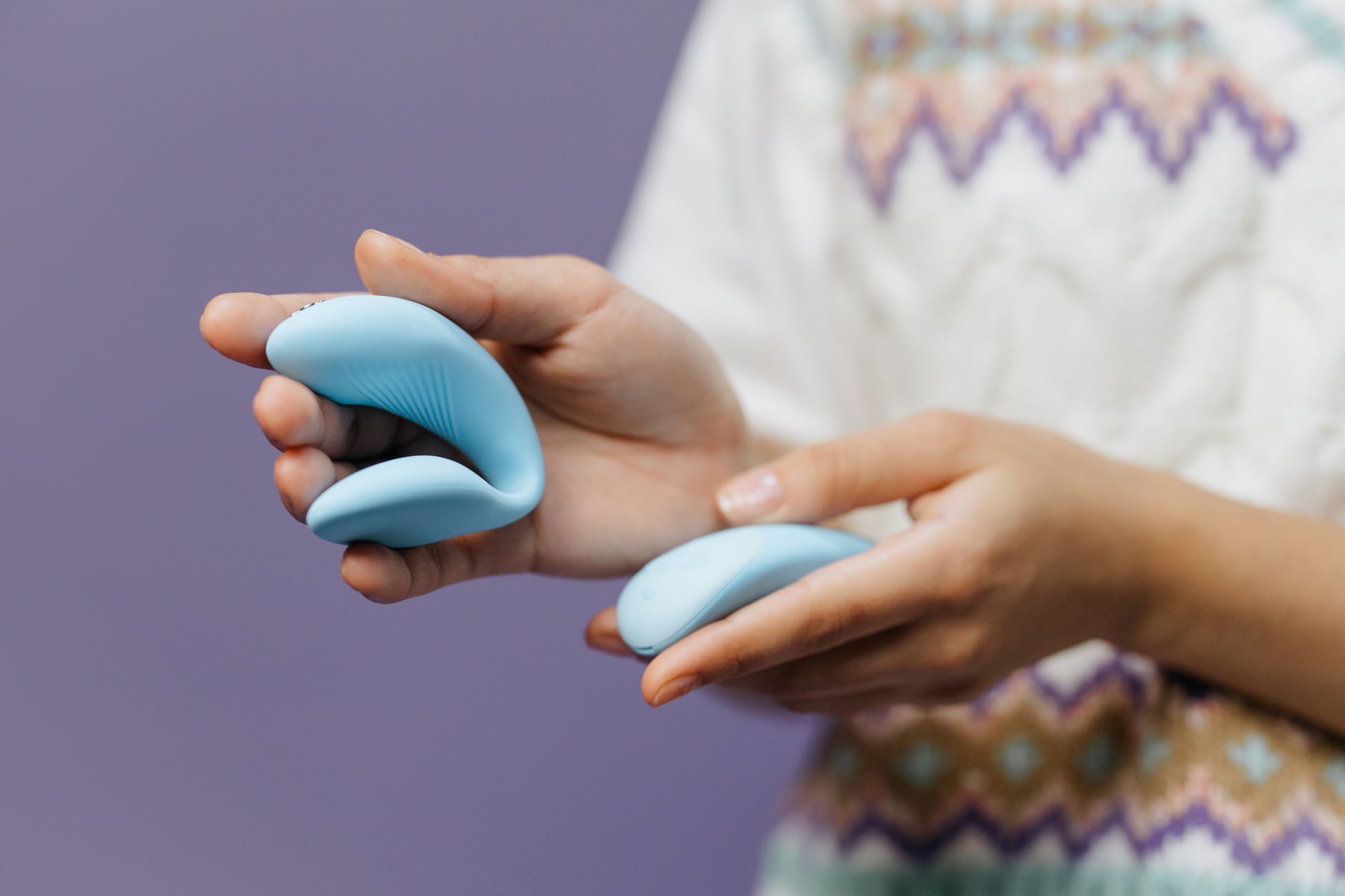
A lemon vibrator changes this dynamic entirely. Not because it rushes anyone, but because it lets you access pleasure independently while your partner catches up. And that paradoxically takes all the pressure off.
Why arousal timing matters more than you think
Arousal isn't a switch that flips the same way for everyone. For some people (often those with vulvas, though not always), arousal takes real time. Lubrication, clitoral engorgement, mental focus, relaxation. These don't happen on demand. For others, arousal is faster and peaks quickly. When you're paired with someone on a different timeline, one person always feels like the bad guy: the one who's "too slow" or "too fast."
The kicker? This isn't about desire. Your partner wants you. They're just warming up differently. And the longer you wait for them to catch up, the more your own arousal plateaus or drops. You're both losing pleasure because you're trying to synchronize something that's naturally asynchronous.
Research on sexual synchrony shows that couples report higher satisfaction when they stop trying to match each other's arousal curves and instead create space for parallel pleasure. A lemon vibrator makes that space very real.
How a lemon sucker changes the waiting game
Instead of lying there, you start with yourself. A lemon clitoral vibrator lets you build arousal independently. No pressure on your partner to keep up. No resentment building in you. You're both moving at your own speed, and the energy in the room actually gets better because nobody's performing.
Here's what this looks like in practice:
You start with your lemon vibrator while your partner is still in the early warm-up phase. You're using a lower suction setting (pattern 1 or 2), enjoying the sensation without expectation of orgasm. This isn't about rushing to the finish line. It's about honouring your own arousal and keeping it alive.
Your partner watches. Or joins foreplay. Or just relaxes knowing they don't have to rush. The psychological relief alone shifts the whole dynamic. You're not frustrated because you're taking care of yourself. They're not anxious because there's no timer running.
When your partner is ready to engage more actively, you can either continue with your lemon vibrator or move into partnered activity. Either way, you're both genuinely aroused instead of one person faking readiness and the other person forcing desire.
The specific patterns that work for mismatched timing
You want patterns that feel good but don't push toward orgasm too quickly. This gives you something to do while your partner catches up, without leaving you overstimulated before anything mutual begins.
Start with the Lem's pattern 1 or 2. These are steady, rhythmic, and deeply satisfying without being intense. Spend 10 to 15 minutes here. Pay attention to what you're feeling physically and mentally. This isn't foreplay in the traditional sense. It's genuine pleasure that happens to exist in the same room as your partner's own warm-up.
If your partner is getting close to readiness, you might bump to pattern 3 or 4. These patterns have a bit more variation and intensity, which mirrors the natural buildup as your partner's arousal accelerates. You're still not chasing orgasm. You're just letting your pleasure deepen as theirs does.
The moment your partner is actually ready to engage, you have full flexibility. Some couples find it incredibly hot to bring the vibrator into partnered activity. Others prefer to step away from it and engage directly. Both work. The point is that nobody's been sitting in a state of suspended arousal, waiting for the other person.
What this does for the emotional dynamic
Here's the thing that surprised most people I work with: using a lemon vibrator while your partner catches up actually deepens intimacy instead of creating distance.
Why? Because it removes the power dynamic. You're not waiting passively for permission. You're not subtly signalling that you're ready and they're behind. You're demonstrating that you trust your own pleasure, and that your partner's timeline doesn't threaten yours. That's incredibly attractive and incredibly safe all at once.
Your partner also stops feeling like they're failing. There's nothing to fail at. You're both doing your own thing, moving toward connection instead of toward performance. The pressure evaporates.
This also matters for people with anxiety or trauma around sex. When there's no audience-based performance pressure, when you're allowed to move at your own pace, the nervous system actually relaxes. Your partner's arousal often accelerates precisely because the pressure is gone.
Managing the conversation beforehand
You can't just pull out a lemon clitoral vibrator without context and expect it to land well. Have this conversation outside of the bedroom, when you're both calm and not primed for sex.
Start with something like: "I've noticed that we sometimes have different timing with arousal. That's totally normal. I want to find a way that works better for both of us so we're both genuinely enjoying ourselves instead of one of us waiting around."
Then bring up the idea: "I'm thinking about using a vibrator for myself while we're getting intimate. That way I can enjoy my own pleasure without putting pressure on you to match my timeline. Does that feel okay to you?"
Most partners feel relief hearing this. You're literally giving them permission to warm up at their own pace while you're taking responsibility for your own arousal. That's not selfish. That's collaborative.
If your partner has concerns (jealousy, feeling inadequate, etc.), listen. Those feelings make sense. But help them see that this isn't about them being insufficient. It's about both of you getting exactly what you need.
When to bring a lemon vibrator into shared sessions
Some couples enjoy incorporating the vibrator into partnered play once arousal is roughly aligned. Your partner can use it on you, or you can use it while they're inside you or while you're touching them.
Others prefer to keep it as an individual tool during the warm-up phase and step away from it once mutual activity begins. Both approaches are completely valid.
The key is that bringing a vibrator into shared play should feel optional, not obligatory. If it enhances the experience, great. If you both prefer to move away from it once you're more connected, that's equally valid. The vibrator is a bridge, not a destination.
The long-term shift this creates
Couples who embrace parallel arousal instead of fighting it report better sex overall. Not because the vibrator is magical, but because the pressure drops. When pressure drops, arousal actually increases. When arousal increases, both people enjoy the experience more. When both people enjoy it more, intimacy deepens.
I've watched this pattern shift entire relationships. Not because a toy fixed anything, but because it gave two people permission to stop performing for each other and start actually connecting.
Your arousal timing might never be identical. But with a lemon vibrator and a shift in how you approach the warm-up phase, it doesn't have to be.
People also ask
Is it weird to use a vibrator if my partner is in the room?
Not at all. Lots of couples find it incredibly intimate. You're literally letting your partner see you experience genuine pleasure. That's vulnerable and connecting, not weird or selfish. If it feels awkward, that usually means you need a five-minute conversation about what you're both comfortable with, not that the idea itself is problematic.
What if my partner feels threatened by the vibrator?
That's real, and it's worth addressing directly. Often the threat isn't about the toy itself. It's about fear that they're inadequate or that you'd rather be alone. Reassure them that this is about expanding your pleasure together, not replacing them. Consider how to use a lemon vibrator when partner pressure makes orgasm difficult if your partner tends to feel insecure during sex. Sometimes that insecurity is the real blocker, not the vibrator.
How long should I use the vibrator before we engage together?
There's no magic number. Use it until you feel genuinely aroused and your partner is showing signs of readiness. This might be 10 minutes or 30 minutes. The point isn't to hit a specific time. It's to give you both space to move at your own pace. Some nights you'll use it briefly. Other nights you'll use it longer. Pay attention to what feels right that evening.
Can we use a lemon vibrator together from the start if we're both struggling with arousal?
Absolutely. Some couples find that watching their partner use a vibrator is incredibly arousing and speeds up their own warm-up. Others find that having their own stimulation while their partner has theirs creates a really connected moment without pressure. Try it and see what your bodies respond to.
What if one of us always wants to skip the vibrator part and go straight to partnered activity?
Then skip it. The vibrator is a tool, not a rule. If you're both genuinely aroused and ready without it, that's perfect. Use it on nights when arousal timing is more mismatched. It should feel like an option that enhances things, not another obligation.
Does using a vibrator mean my partner isn't turning me on enough?
No. A lemon clitoral vibrator isn't a referendum on your partner's attractiveness or skills. It's a practical solution to a timing issue. Your partner can be incredibly attractive and arousing and still need different warm-up time than you do. These things coexist. A vibrator is just a tool that lets you both experience genuine pleasure instead of performing.
The shift that matters
Mismatched arousal timing is one of those relationship problems that feels personal but is actually just physics. Different bodies warm up at different speeds. That's not a flaw. It's just a difference that gets easier to navigate once you stop fighting it.
A lemon sucker doesn't fix the difference. But it gives you both permission to exist in it without resentment or pressure. And that's when arousal actually flows the way it's meant to. When pleasure becomes something you create together instead of something you perform for each other, everything shifts. Your partner probably knows this already. You're just finally saying it out loud with your body.
If arousal timing has been a source of tension, consider having that conversation this week. Not to pressure anyone into using a vibrator, but to acknowledge that you're both working with different timelines and that's okay. The vibrator is just the practical acknowledgment of what's already true.