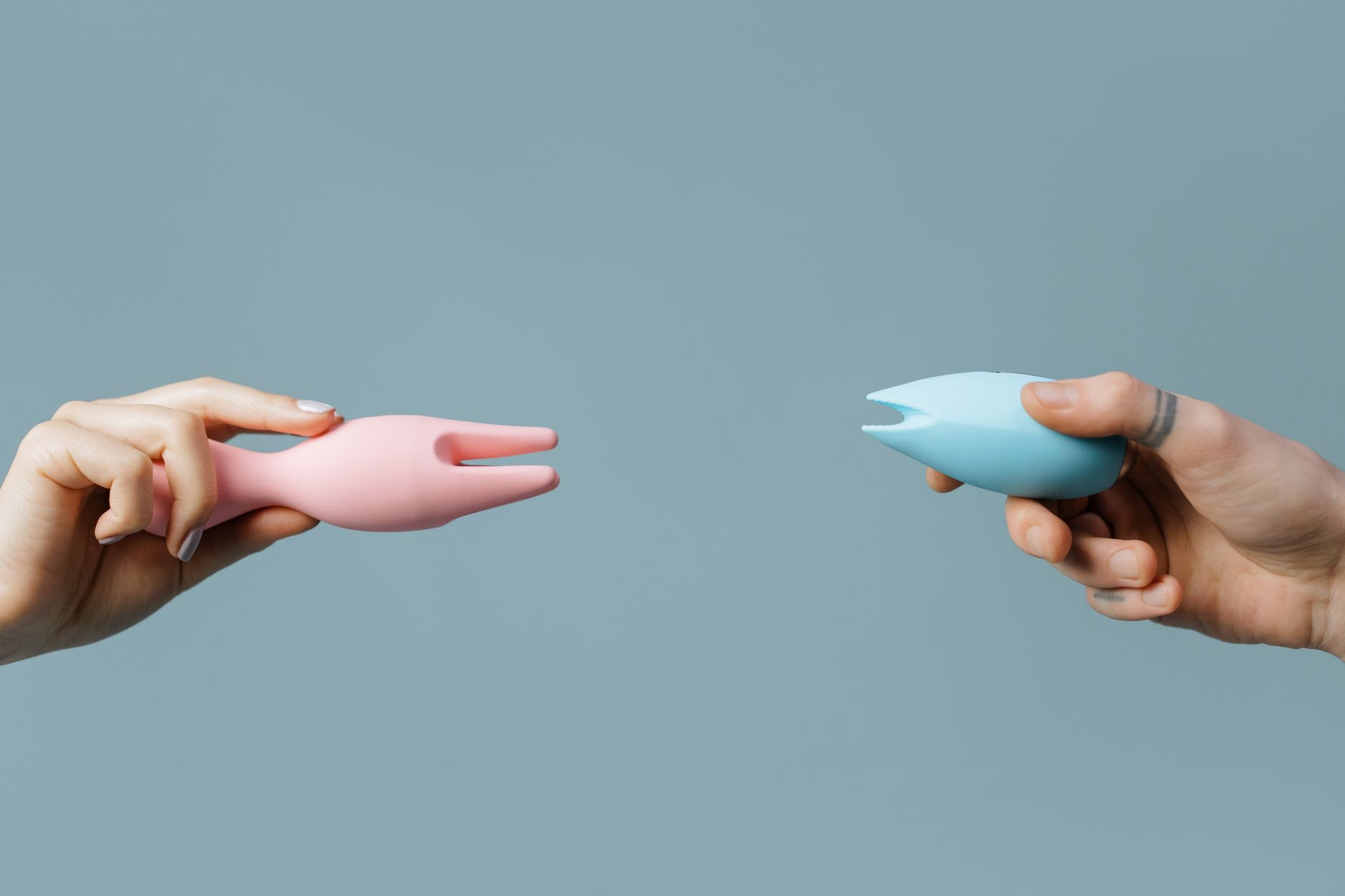
When your body shuts down under pressure
Let's be real: you want to orgasm with your partner. You love them, you're attracted to them, the setup is there. But the moment you feel their attention locked on you, waiting for it to happen, something switches off. Your body tightens. Your brain goes quiet. And then the spiral starts: "Why can't I just come? What's wrong with me? Are they frustrated?"
Nothing is wrong with you. This is performance anxiety, and it's wildly common. The neurology is simple. When you sense evaluation (even loving evaluation), your nervous system shifts into a threat-detection mode. Blood flows away from your genitals and toward your limbs. Arousal stalls. Orgasm becomes impossible.
Here's what matters: this isn't a character flaw or a sign your relationship is broken. It's a predictable physiological response to pressure. And it's completely reversible.
Why pressure kills arousal differently than stress
You might assume orgasm trouble is just stress. But performance pressure works differently. Stress (burnout, money worries, deadlines) creates a background hum of tension. Performance pressure creates acute focus on the one thing you're trying not to think about.
Research in sexual medicine shows that people with vulvas are particularly sensitive to distraction and evaluation during sex. This isn't a flaw in female neurology; it's that the neural pathways for arousal require something your amygdala (threat-detection brain) actively suppresses: relaxation and permission.
When your partner is waiting for you to come, your amygdala is doing its job. It's detecting a potential threat (disappointment, inadequacy, mismatch). Your body responds by clamping down.
The mechanics of what happens to your body
Under performance pressure, three physical shifts happen:
1. Pelvic floor tightens. Your pelvic floor muscles are under voluntary control, but they also respond to threat automatically. When you feel watched or evaluated, they contract. This makes orgasm harder, not easier, because orgasm requires pelvic floor release.
2. Arousal stalls. Blood vessels that normally dilate to increase clitoral sensation and lubrication constrict instead. This is why you might feel numb or dulled, even though you're physically attracted to your partner.
3. Mental arousal flatlines. The fantasy, the sensation, the momentum you had alone suddenly becomes impossible to access. Your prefrontal cortex (the thinking brain) takes over, and your body stops listening to pleasure signals.
A lemon vibrator like the Lem changes this equation. It bypasses the pressure entirely.
How a clitoral vibrator resets your nervous system
Here's the thing about suction and air-pulse vibrators like the Lem: they're intense enough that they can break through performance anxiety's grip in a way manual touch sometimes can't.
Your partner's hand or tongue carries relationship weight. Consciously or not, you're aware of their attention, their timing, whether they're enjoying it. A vibrator is neutral. It has no agenda, no expectations, no emotional stake in whether you come.
When you use a lemon clitoral vibrator with your partner present, you're also physically taking control. You're holding it. You're adjusting the intensity. You're directing your own pleasure instead of receiving it. This shift from passive to active is neurologically significant. It moves you from evaluation mode back into agency.
Secondly, the sensation from a good lemon vibrator is strong enough to anchor your attention. You can't dissociate into performance anxiety when your clitoris is receiving 2000+ micro-suctions per minute. Your brain has to stay present.
The three-stage approach to using the Lem with your partner
Stage 1: Get comfortable alone first. Use your lemon clitoral vibrator solo for at least a week, ideally longer. Find the patterns, rhythms, and intensities that work for you. This is critical. You need to know your own pleasure pathway without any external expectations.
Stage 2: Use it during partner foreplay, no expectation of orgasm. Start with you holding the Lem while your partner is touching you elsewhere. Notice how different it feels to have the vibrator under your control while they're present. No goal. No pressure to climax. Just sensation and connection.
Stage 3: Build toward orgasm together, with you leading. Once you've come with the vibrator while your partner is present (doesn't matter if they're watching or just in the room), you've already broken the pressure pattern. The next step is using it together during sex or foreplay while they touch you elsewhere.
The key to all three stages: your partner knows the Lem is non-negotiable for right now. This isn't forever, necessarily. But while you're rewiring your nervous system's response to pressure, it's essential.
What your partner needs to understand
Honestly, this is where many couples get stuck. Your partner might interpret the vibrator as a rejection ("Aren't I enough?") or as pressure from you ("Now she's worried about coming"). Neither is true, and both are worth addressing directly.
Here's what to say: "When I feel like you're waiting for me to come, I freeze. That's not about you or our attraction. It's my nervous system going into protection mode. The vibrator lets me relax because the pressure's off. It actually helps me feel closer to you."
That last part matters. Using a lemon sexual toy with your partner present isn't about replacing them. It's about creating the conditions where you can actually receive pleasure from them.
Your partner can also understand that their job shifts. Instead of trying to make you come, they're creating a context where you feel safe and desired while you're doing the work. For some partners, that's easier. For others, it requires letting go of a narrative about what sex is supposed to look like.
Practical setup: making it feel natural
Don't overthink the logistics. You don't need candles or a speech. Here's what actually works:
When you're together naked or partially clothed and there's mutual interest, one of you says, "I'm going to use the Lem. Do you want to touch me elsewhere?" That's it. Your partner can kiss you, touch your breasts, be inside you (if that works with the vibrator positioning), or just hold you. The point is they're present and connected, not sitting back as an audience.
Start with patterns 1 or 2 on the Lem. Low intensity lets you actually feel your partner's touch and presence. You can always build intensity later.
If you come, great. If you don't, also fine. You're not trying to hit a target anymore. You're rebuilding trust with your own body.
When progress stalls (and what to do)
Sometimes you'll use the Lem with your partner present and still freeze. This doesn't mean it isn't working. Nervous system rewiring isn't linear.
If that happens, take a step back. Go back to Stage 1 or 2. Use the vibrator alone for a few sessions. Your partner can be aware this is happening without it being a big conversation.
If the pressure anxiety is severe, or if you're noticing it's affecting your entire relationship, talk to a therapist. A few sessions with someone who specializes in sexual anxiety can speed up the rewiring significantly.
One more thing: this pattern often has roots in earlier experiences. Maybe an ex made you feel inadequate. Maybe a parent's conditional love taught you to perform. That history isn't your fault, and a lemon clitoral vibrator won't fix it alone. But combined with awareness and communication, it becomes the tool that lets you actually practice the opposite pattern with someone you trust.
The longer view
Using the Lem with your partner while you work through performance anxiety isn't a permanent solution you're signing up for. It's a circuit-breaker.
Many people find that after a few months of regular use, their nervous system settles. They start having orgasms with the vibrator while their partner is present. Then they start having them without it. The pressure anxiety doesn't completely disappear, but it loses its power. Your body remembers that it's safe to let go.
Some people keep using a lemon sexual toy long-term because it feels better, not because they have to. That's fine too.
The goal isn't to white-knuckle your way back to what sex was before the pressure showed up. The goal is to build something new where pleasure and presence coexist without performance.
Common questions
Does using a vibrator mean my partner isn't satisfying me?
No. This is performance anxiety, not attraction anxiety. You're attracted to your partner. Your nervous system is just stuck in a protective pattern. The vibrator helps you unstick it. Many people who use lemon vibrators with partners report feeling more connected and satisfied long-term, not less.
How long until I can come without the vibrator again?
It varies. Some people see shifts in weeks. Others take a few months. There's no timeline. The point is you're practicing relaxation and pleasure in your partner's presence, which rewires the threat-response. Orgasm will follow when your nervous system believes it's safe.
Should I be embarrassed using a clitoral vibrator with my partner watching?
You might feel embarrassed, and that's normal. Shame around pleasure tools is culturally baked in. But embarrassment doesn't mean you shouldn't do it. Some of the most important growth happens in exactly this discomfort zone. Your partner is likely thrilled you're finding a way forward. Most partners are.
What if my partner doesn't want me to use a vibrator?
Then you have a different conversation than the one about performance anxiety. You have a conversation about control, trust, and what your partner needs from sex. That might need a therapist or a counselor. A partner who refuses to let you use tools that help you feel pleasure is setting a boundary that says their comfort matters more than yours. That's worth examining.
Can using a lemon vibrator make my clitoris numb over time?
No. The clitoris has around 8000 nerve endings. A lemon sucker stimulates them intensely, but it doesn't damage them. Using the Lem regularly doesn't create numbness. If anything, consistent stimulation makes sensation clearer and more responsive over time.
Is it okay to come with the vibrator but not with my partner's touch?
Completely okay. In fact, that's the goal in Stage 2 and Stage 3. You're teaching your nervous system that orgasm is possible in your partner's presence, even if it requires the specific sensation the vibrator provides. Once that belief settles in, everything else gets easier.
Getting started
You don't need permission or a perfect moment. You need a conversation with your partner (clear, direct, honest) and a lemon clitoral vibrator. The Lem works well for this exact situation because it's strong enough to break through anxiety but intuitive enough that you can focus on sensation, not technique.
Start with Stage 1. Use it alone until you feel confident. Then bring your partner in. Your nervous system will notice the difference. Give it time to believe it's actually safe.