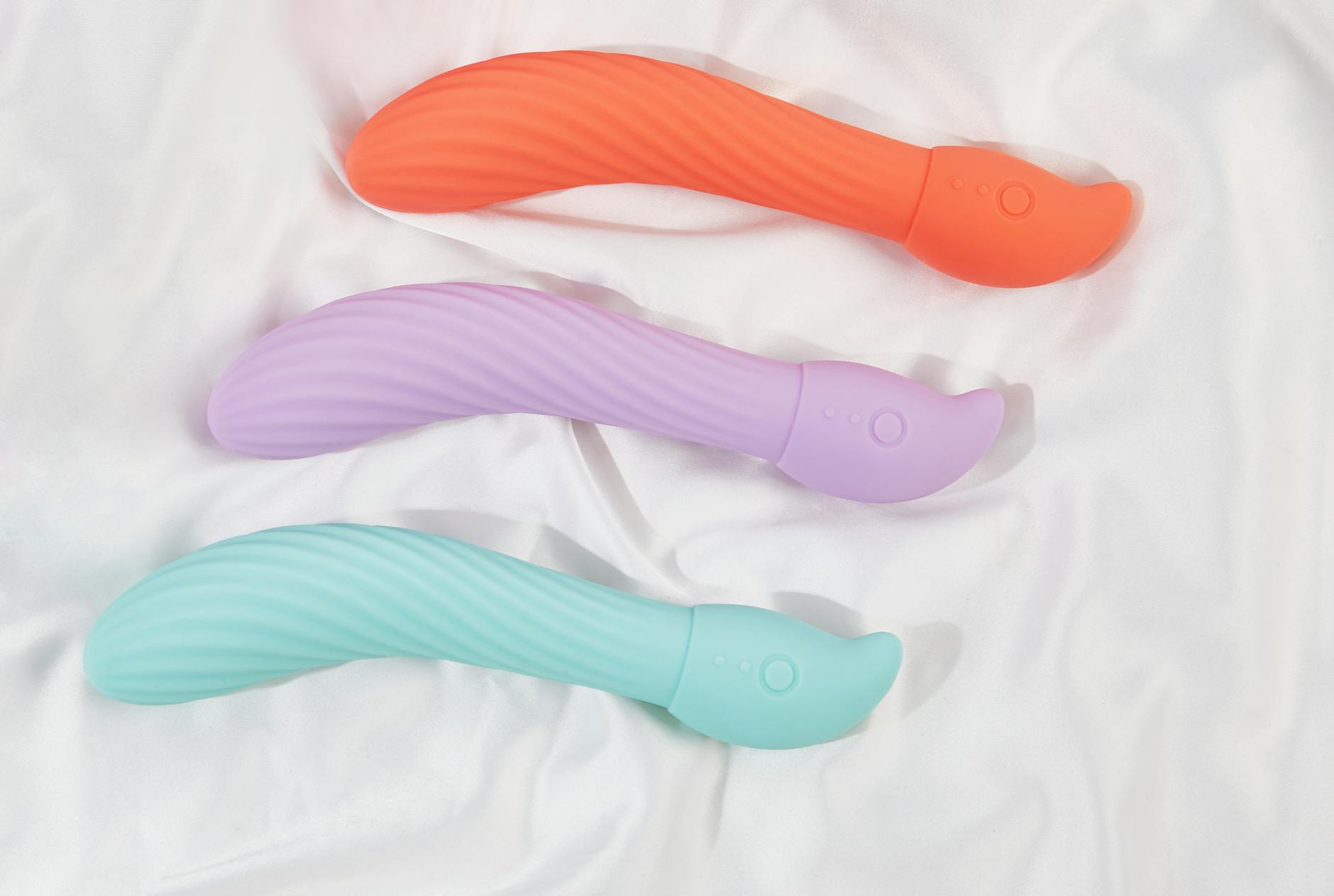
Here's the thing about birth control and pleasure
Hormonal birth control is one of the best tools we have for bodily autonomy. And it also quietly rewires how pleasure feels. Most people don't connect the two, which means they spend months wondering why their orgasms feel duller, or their arousal takes forever to kick in, or a toy that used to work brilliantly now leaves them cold. Then they assume something is wrong with them. It's not.
Your birth control might be dampening your pleasure response. And knowing that changes everything about how you use a lemon vibrator.
What hormonal birth control actually does to your body
Let's start with the mechanisms. Hormonal birth control (pills, patches, rings, shots) works by flooding your system with synthetic estrogen and progestin, or progestin alone. This suppresses the hormonal surges that trigger ovulation. But here's what doesn't get explained in the clinic: it also muffles the hormonal peaks that fuel desire.
Naturally cycling people experience a testosterone and dopamine spike around ovulation. That's the neurochemical basis for the feeling we call "turned on." Hormonal birth control flattens that spike. Your baseline stays steadier, which is great for predictability and mood stability. But it's not great for the intensity of arousal.
Progestin also affects blood flow to the clitoris and vaginal tissue. Less blood flow means the tissues swell less during arousal, which changes how quickly you become physically ready for stimulation. It takes longer to build, and the sensations can feel less acute.
Some people also experience a drop in libido itself. This is not psychological. It's a documented side effect affecting roughly 15 to 20 percent of people on hormonal contraception. If that's you, it's worth a conversation with your prescriber about whether a different formulation might help.
Why your lemon vibrator might feel different now
Let's translate that into what actually happens when you pick up a clitoral vibrator. Three key shifts:
Slower arousal buildup. Your body needs more time to engage. That warm-up period that used to be three minutes might now be ten or fifteen. This doesn't mean you're broken. It means starting your session with lower intensity and patience is not optional.
Changed sensation intensity. The suction mechanism in a lemon vibrator works by creating negative pressure that draws tissue into the cup and stimulates the clitoral nerve complex. When blood flow is dampened by hormonal birth control, that nerve response feels muted. Patterns that used to deliver waves of sensation might now feel more like background hum.
Orgasm architecture shifts. Some people on birth control report that orgasms feel flatter, shorter, or more concentrated in one spot rather than full-body. Others say the refractory period changes. You might find yourself needing longer breaks between rounds, or finding that after one orgasm, the tissues become too sensitive to continue.
None of this is permanent. And it's completely reversible if you change contraception methods.
How to adjust your technique with a lemon vibrator
If you're on hormonal birth control and want to get the most from a clitoral vibrator, these adjustments actually matter.
Start with pattern 1 or 2, not your old favorite. Your go-to setting might no longer be the right entry point. Spend two or three minutes at the lowest intensity, letting your body wake up. This is not wasted time. This is the actual arousal process. Rush it and you're fighting your own physiology.
Build duration, not intensity. Instead of jumping to a higher pattern, spend longer at a lower one. Fifteen minutes on pattern 3 might deliver more sensation than five minutes on pattern 5. Your nervous system needs time to accumulate stimulus.
Use a water-based lubricant, even if you never needed it before. Hormonal birth control can reduce natural lubrication. Adding external lubrication changes the interface between the silicone cup and your tissue, which can actually amplify the suction sensation. It also prevents any micro-friction that might feel uncomfortable rather than pleasurable.
Experiment with positioning. If lying on your back stops working, try sides or sitting upright. Gravity and pelvic floor tension affect how suction feels, and sometimes a simple position shift restores sensation intensity that seemed to vanish.
Consider shorter, more frequent sessions. Instead of one long exploration, try three ten-minute sessions spread through the week. Your body might respond better to consistent, moderate stimulation than it does to occasional marathon sessions.
The psychological layer that nobody talks about
Here's the tricky part: some of what you're experiencing might not be hormonal. Some of it might be psychological, and it matters to name that.
Many people internalize a lot of shame around reduced arousal on birth control. They assume their partner finds them less desirable, or that they're "broken," or that they need to perform interest they don't actually feel. That shame becomes its own dampening effect. Your nervous system picks up on the pressure, and arousal becomes harder.
If you're using a lemon vibrator solo, you have permission to be honest with yourself. If arousal is harder now, that's information, not a failure. You're allowed to take longer. You're allowed to need more stimulation. You're allowed to find that your pleasure looks different now and still be fully satisfied by it.
If you're with a partner, the conversation gets more important. "My birth control is changing my arousal response" is a completely different conversation than "I'm not attracted to you anymore." Separating those two things prevents a lot of unnecessary hurt.
When to consider switching contraception
Some hormonal birth control formulations are gentler on arousal than others. Newer low-dose pills, certain IUDs, and the implant have different side effect profiles. If your current method is significantly dampening pleasure and you've adjusted your technique without improvement, it's worth asking your doctor whether a different option might work for your body.
Non-hormonal options like copper IUDs, condoms, or barrier methods don't interfere with your natural hormone cycle at all. Your arousal stays at baseline, though you lose the hormonal predictability that many people value.
The key is that this is a choice you get to make. You deserve contraception that works for your body and your pleasure. If what you're using now isn't doing that, you have other paths.
Using your lemon vibrator strategically
If you're staying on your current birth control, here's what I recommend for maximum pleasure.
First, track your response over a month or so. Birth control stabilizes hormones, but there can still be tiny fluctuations. Some people find that they have slightly easier arousal during the inactive pill week (or just before their period if they're on a method that allows menstruation). Notice your own pattern.
Second, commit to warm-up. I know I've said this twice now. It's worth saying three times. Fifteen minutes of foreplay, touching, mental stimulation, or just lying with your lemon vibrator nearby while you let your body settle. That time is not boring. That time is the actual work.
Third, give yourself permission to use your vibrator differently than you used to. If you loved edging and now that feels frustrating, try pure sensation without the stopping. If you used to orgasm from external stimulation alone and now you need internal pressure too, try combining your lemon vibrator with a finger or partner inside. Your pleasure doesn't have to look the way it used to look.
Lastly, check in with your overall health. Sleep, stress, exercise, and how much water you're drinking all affect arousal more than people realize. Some of what feels like a birth control issue is actually a sleep deprivation issue. Worth investigating.
FAQ: Birth Control, Hormones, and Pleasure
Can I switch birth control methods if my current one is killing my arousal?
Completely, yes. Talk to your prescriber about the side effect you're experiencing and ask about alternatives. Some people find that switching from a combined pill (estrogen and progestin) to a progestin-only option helps. Others do better on a copper IUD or a barrier method. Your sexuality is worth the conversation.
Does every type of hormonal birth control affect arousal the same way?
No. Pills with higher progestin doses tend to have stronger effects on libido and arousal. Lower-dose pills, patches, rings, and IUDs have different side effect profiles. What killed one person's arousal might not affect someone else at all. This is why talking to your doctor about your specific experience matters.
How long does it take for arousal to improve if I switch contraception?
If the dampening is hormonal, you can expect shifts within one to three cycles of a new method. Some people feel the difference within days. Others need a few weeks. Your body also needs time to adjust to new hormones. Be patient with yourself.
Is it normal for orgasms to feel different on birth control?
Very normal. Hormonal birth control changes blood flow and nerve sensitivity, which literally changes how orgasms feel. They might be shorter, feel more localized, or require more stimulation. If they feel painful instead of just different, mention that to your doctor.
Can I combine my lemon vibrator with birth control pills that already affect arousal, or will that make it worse?
Using a lemon clitoral vibrator absolutely can help, especially if you adjust your approach. Lower intensity, longer duration, and more patience. Your vibrator isn't fighting your birth control. It's working with your actual physiology as it is right now. That's a win.
Should I stop birth control if it's affecting my pleasure?
That's a deeply personal decision that depends on what you need from contraception, what other options exist for your body, and how much this side effect is actually bothering you. Some people find that slightly reduced arousal is worth it for the security and other health benefits. Others don't. Neither answer is wrong. But it's your choice to make, not something you should just accept.
The bottom line
Hormonal birth control rewires pleasure. That's real, it's measurable, and it's not your imagination. But it's also navigable. Your lemon vibrator can work brilliantly alongside your birth control if you meet your body where it actually is, not where you wish it was. Slower arousal is not broken arousal. Different sensation is not diminished sensation. Your pleasure matters enough to understand it, adjust for it, and defend it. That's what using a lemon vibrator on hormonal birth control is really about.