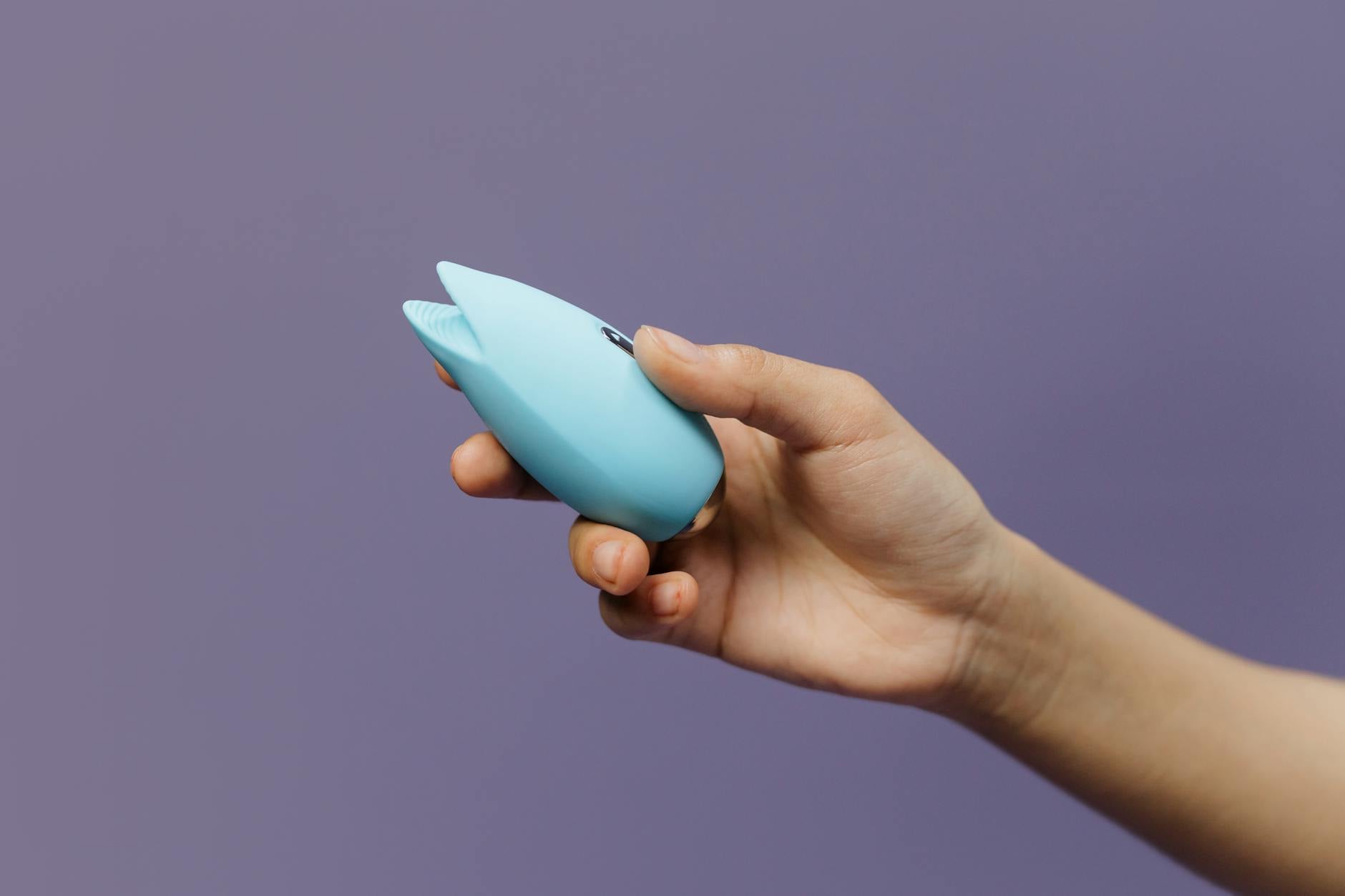
The thing nobody tells you about touch aversion
Touch aversion isn't rejection. It's your nervous system saying no before your brain can finish the sentence. It shows up during stress, burnout, trauma recovery, or even just relationship fatigue. Your partner might be wonderful. Your desire might still exist somewhere underneath. But the idea of hands on your skin makes you want to crawl out of it.
Here's what's hard to explain when you're in it: you're not broken. Your nervous system is protecting you. And there's a path through this that doesn't require you to white-knuckle your way back to being touched.
What touch aversion actually is (and isn't)
Touch aversion is when physical contact feels intolerable. Not unpleasant. Not boring. Genuinely hard to tolerate. It's different from low desire (you might want sex, just not hands involved). It's different from fatigue (though they often stack together). And it's not the same as a phobia, though it can feel like one.
Common triggers include burnout, grief, medical trauma, relationship conflict, unresolved resentment, or autonomy violations. Sometimes it's about control. Sometimes your body is processing something your mind hasn't caught up with yet. Sometimes it's situational. Sometimes it's been there for years.
The important thing: desire and touch aversion can absolutely coexist. You can want to feel pleasure and also genuinely need a boundary around how you get there.
Why lemon clitoral vibrators work when touch feels impossible
A lemon vibrator removes the partner variable without removing the pleasure. That's not a workaround. That's the entire point.
Unlike manual stimulation, which requires someone else's hands or your own in a way that can feel claustrophobic, a lemon sucker operates independently. You're controlling the speed, the intensity, the pressure, and the exact moment of contact. That control is not incidental. It's the difference between pleasure feeling safe and pleasure feeling like a threat.
Physically, lemon clitoral vibrators use suction rather than friction. Suction stimulates the clitoris in a way that feels contained and precise. You're not getting input from a partner's changing pressure or rhythm. You're getting consistent, predictable sensation that you can adjust the second it stops feeling good.
For people with touch aversion, that predictability is everything.
Starting with a lemon vibrator when touch feels overwhelming
Begin solo. Seriously. Not because partnered sex is wrong, but because your nervous system needs to learn that pleasure doesn't come with the threat of unwanted touch.
Set up a space where you feel secure. Privacy, comfortable temperature, no pressure to finish or perform. Turn on the device at the lowest setting before anything else. Just hold it. Feel the vibration in your hand. Let your nervous system register that this is a tool, not a demand.
The first few times, you might spend 20 minutes just getting comfortable with the sensation. That's not procrastination. That's your nervous system recalibrating what touch can mean. You're teaching your brain that sensation can happen without violation.
When you do use it on your body, start at the lowest intensity. Place it near the clitoris without direct contact at first. Some people find that gentle pressure around the area, or stimulation of the outer labia, builds arousal in a less overwhelming way. You can always increase intensity once you're in your body.
When you're ready to include a partner
This is where clarity becomes everything.
Before you try anything partnered, have a separate conversation from any sexy context. Tell your partner what does and doesn't feel okay. This isn't sexy or romantic. It's a practical safety plan. "I need you to ask before you touch me" is different from "I need you never to initiate." One opens a door. One closes it. Be specific.
One approach that many couples find works: you use the lemon vibrator while they watch, help manage lighting or positioning, or provide verbal encouragement only. They're present without touching you. That can be surprisingly intimate. Presence isn't the same as touch.
Another approach: they hold the vibrator while you guide it. This puts you in control of the speed and placement, but they're still participating. Some people find that reintroduces partnered pleasure without forcing direct skin contact.
Start with these before moving toward any conventional partnered sex. Your nervous system doesn't need coercion. It needs evidence that pleasure can be safe.
Managing the stories that come up
Honestly, the hardest part isn't physical. It's the narrative.
You might feel guilty that you need a vibrator instead of your partner's touch. You might worry they feel rejected. They might interpret your aversion as rejection, even when you've explained it carefully. These feelings are real and worth addressing directly.
Inside your relationship, this is about rebuilding trust. Not sexual trust. Trust that your body matters more than performance. Trust that saying no is safe. Trust that pleasure can be rebuilt at a pace your nervous system can handle.
It often helps to have explicit conversations about what touch aversion means for your relationship. "I love you and I need space from touch right now" is complete. It doesn't need fixing or justification. But your partner needs to hear you say it directly.
If resentment is part of the aversion, that's bigger than a vibrator can solve. That's where a couples therapist becomes valuable. A lemon vibrator can help you reconnect to pleasure. It can't fix broken communication or unresolved hurt.
The timeline is yours
Some people move from touch aversion to partnered sex in weeks. Some take months. Some people need to recalibrate their relationship entirely, and touch becomes less central to intimacy than it was before. All of that is fine.
The goal isn't to "get back to normal." Normal was the problem. The goal is to rebuild pleasure in a way that feels genuinely safe.
For many people, using a lemon clitoral vibrator solo first helps. It reconnects you to what arousal feels like when there's no pressure. That's the foundation. Once you remember that pleasure is something you can have and control, reintroducing a partner becomes possible, not obligatory.
Your partner also gets something from this. They get a partner who's choosing to engage rather than white-knuckling through discomfort. That's worth the patience.
Checking in with yourself along the way
Touch aversion isn't permanent in most cases, but it's also not linear. You might feel great one week and overwhelmed the next. That's not failure. That's your nervous system doing its job.
If you notice touch aversion getting worse instead of better after a few weeks of regular practice, that's worth pausing and asking what's happening underneath. Are you pushing past genuine discomfort? Is the relationship itself the issue? Is there unprocessed trauma asking for attention? These are questions for a therapist, not something to white-knuckle through with a vibrator.
Lemon vibrators are tools. They're good tools for this situation. But they're not therapy. If touch aversion is rooted in trauma or relationship damage, you might need support beyond a device.
That said, many people find that using a lemon vibrator solo or with a thoughtful partner genuinely does help their nervous system relax. Pleasure and safety start to feel like they can coexist again. That's not nothing.
Frequently asked questions
Can touch aversion go away completely, or will I always need a vibrator?
It varies wildly. Some people move back to enjoying touch as their nervous system settles and the underlying cause resolves. Some people find they prefer vibrators and less manual stimulation long-term. Some move back and forth depending on life stress. There's no single timeline. The question isn't whether you're "fixed." It's whether you're regularly experiencing pleasure in a way that feels good to you.
My partner feels hurt that I don't want them to touch me. How do I help them understand?
This is a separate conversation from the sex conversation. You might say: "This isn't about you or how I feel about you. My nervous system is in protection mode right now. I need your patience while I rebuild comfort with touch." If they're taking it personally and won't accept that boundary, that's relationship work worth doing with a therapist. Your partner can feel disappointed without refusing to honor your needs.
Is using a lemon vibrator alone when I have a partner cheating or avoiding intimacy?
Not if you've agreed on it. Many couples find that solo pleasure actually helps the person with touch aversion feel more connected to their body and sexuality overall. As long as you're communicating and not using solo time as a way to avoid all relationship intimacy, it's just part of rebuilding.
Should I tell my partner about using a lemon vibrator, or is it private?
That depends on your relationship agreements. Some couples are very open about solo pleasure. Some prefer privacy. Neither is wrong. But if touch aversion is affecting your partnered sex life, they probably already know something has shifted. Being honest about how you're rebuilding that part of yourself often opens doors instead of closing them.
How long before I can go back to partnered sex without a vibrator?
There's no standard timeline. Some people need the vibrator alongside partnered touch indefinitely. Some move back to partnered pleasure alone. The goal isn't to "graduate" away from tools. It's to have options that all feel safe and pleasurable.
What if the lemon vibrator doesn't help and touch still feels impossible?
That's worth exploring with a therapist who specializes in somatic work or trauma. Sometimes touch aversion is pointing to something deeper that a vibrator alone can't address. Sometimes you need to work through what the aversion is actually protecting you from. That's real work, and it's worth doing.
Touch aversion isn't a life sentence. But it's also not something to rush through. Your nervous system has a reason for saying no. Find out what it needs, give it that, and pleasure usually follows. A lemon vibrator can be exactly the bridge that gets you there.
Resources and next steps
If touch aversion is connected to trauma, the ISSTD (International Society for the Study of Trauma and Dissociation) can help you find a qualified therapist. For relationship dynamics, the Gottman Institute has resources on rebuilding safety and connection. And if you're looking for education on pleasure as a tool for nervous system regulation, start with the work you're already doing. You're paying attention to your body. That's where rebuilding always begins.