
When speed becomes the enemy of pleasure
Let's be real. Most of us learned to have sex in a framework where time is scarce. Partner's getting restless. Kids might wake up. You've got to work tomorrow. So somewhere along the line, pleasure became something to optimize for efficiency rather than savour.
Then orgasm doesn't happen on the timeline you expected, and suddenly you're anxious about the anxiety, and the whole thing collapses into performance mode.
Here's what happens physiologically: when you're in a rush or feeling watched, your nervous system shifts into sympathetic activation. Blood vessels constrict slightly. The pelvic floor tightens defensively. Sensation becomes less acute. Orgasm becomes harder, not easier. You end up chasing it faster and faster, which makes it recede further.
Lemon vibrators work differently than speed and intensity can alone. Air-suction technology doesn't rely on friction and hammering. It creates a gentle vacuum sensation that actually rewards slowness. The slower you breathe, the more your body can register what's happening. The less you chase, the more it builds.
Why pressure kills arousal faster than anything else
Three things happen when sex becomes goal-oriented rather than sensation-oriented:
1. Your brain stops paying attention to your body. Instead of registering pleasure, you're running a mental checklist: Is this working? How long is this taking? Am I close? That internal commentary is the exact opposite of what turns pleasure on.
2. Your pelvic floor contracts. When you're anxious about performance, your pelvic floor tightens protectively. It's the same reflex that makes you clench your jaw when stressed. Tension in that area makes orgasm feel harder and less satisfying, even when it does happen.
3. You lose connection to what actually feels good. Pleasure isn't one sensation. It's a map of dozens of different touches, pressures, and rhythms. When you're rushing, you narrow that map to just "intense" or "fast." You miss the textures that would actually get you there.
This is where a lemon vibrator becomes genuinely transformative. Not because it's magic. Because its design incentivizes the exact opposite of rushing.
The architecture of a lemon clitoral vibrator
A lemon sucker uses air-pulse technology. Instead of vibrating back and forth (which can numb sensation over time), it creates a rhythmic suction sensation. The key: this sensation actually intensifies when you slow down and breathe into it, rather than when you speed up.
With traditional vibrators, faster often feels "better" to anxious brains. Your clitoris gets overstimulated, sensation flattens, and you end up needing even more intensity to register anything.
With a lemon clitoral vibrator, the sweetest sensations often come at settings 1 through 3. Intermediate speeds where you can actually feel the nuance of the pulse. Where your nervous system stays in parasympathetic activation. Where your body can build arousal gradually instead of spike and crash.
The design literally removes the temptation to overcomplicate things.
How to actually slow down with a lemon vibrator
Four tactical moves that work:
Start way lower than you think you should. If you typically jump to intensity level 5 or 6, begin at 1. Give yourself permission to stay there for 5 to 10 minutes. Your nervous system needs time to downshift from "performance mode" to "sensation mode." This isn't wasted time. It's the foundation.
Breathe intentionally. Most people hold their breath during sex without realizing it. That shallow breathing keeps your nervous system revved up. Instead, try this: inhale through your nose for four counts, exhale through your mouth for six. Your vagal nerve (the main brake pedal on your stress response) activates on the exhale. This rhythm alone can transform arousal from frantic to embodied.
Move in tiny circles instead of applying direct pressure. With the Lem, rather than holding it stationary, trace slow circles around your clitoris. This creates layers of sensation instead of one intense point. It feels different, which interrupts the anxiety loop. Different is good. Different means your brain stays curious instead of checking the clock.
Bring a partner into the rhythm. If you're with someone, ask them to match your breathing or place a hand on your chest or lower belly, moving gently with each exhale. Physical sync is calming. It signals safety to your nervous system. Pressure dissolves when you're truly together in the moment, not just in the same bed.
When "finish faster" is actually the deeper problem
Sometimes pleasure feels rushed because the relationship itself does. You're managing your partner's need for sex. You're not sure they'd stay if you needed forty-five minutes. You've learned that your pleasure is less important than their satisfaction.
A lemon vibrator can't fix a relationship problem. But it can create a private negotiation with your own body. When you give yourself permission to take twenty minutes at a lower intensity, you're not just changing the mechanics of arousal. You're practicing a boundary. You're saying that your pleasure is not a transaction to be optimized.
Sometimes that boundary becomes the thing that shifts the relationship. Your partner feels the difference. Sees that you're not performing anymore. Asks what changed. And suddenly there's room to talk about why rushing was ever necessary.
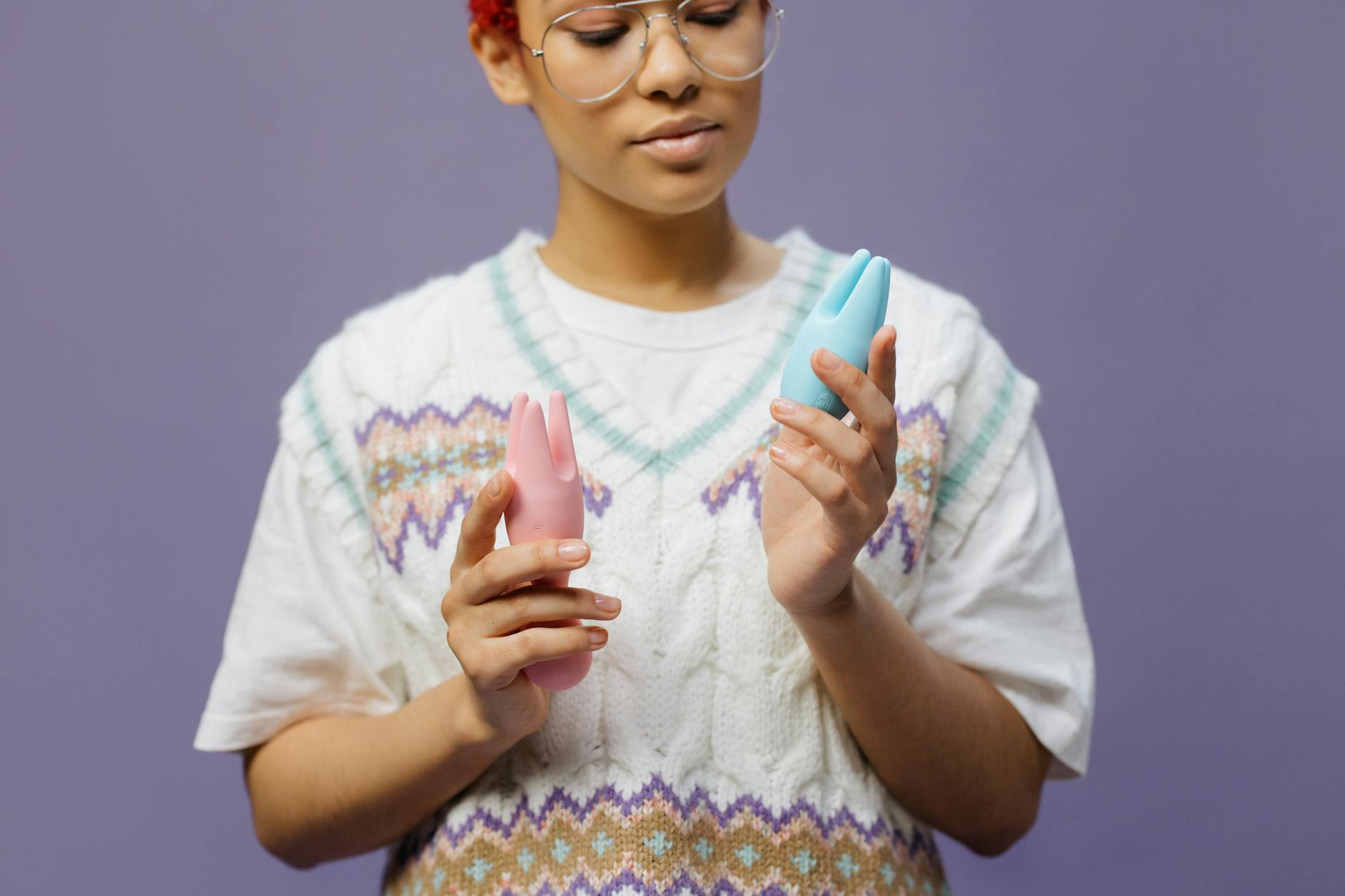
Photo by cottonbro studio on Pexels
The role of setting and privacy
Rushed pleasure often happens in rushed spaces. You're sneaking five minutes before work. You're tense about potential interruption. Your body knows you don't have time to fully relax.
One of the biggest shifts people report: using a lemon clitoral vibrator during extended private time. Not rushed. Not furtive. A full hour where you're not "supposed" to be doing anything else. Your phone is in another room. You've told your partner or household that you need this time.
That's when you discover what your body is actually capable of when pressure lifts. Slower arousal. Deeper orgasms. Multiple waves instead of a single peak and crash.
Privacy is not selfish. It's the substrate on which pleasure actually grows.
When to talk to someone about this pattern
If pressure and anxiety around sex have been consistent for years, or if you notice you only feel relaxed during sex when you're alone, that's worth exploring with a therapist or relationship counselor. Performance anxiety doesn't always fix itself with a better toy, though better tools help.
A lemon vibrator can interrupt the cycle. But talking about why the cycle existed in the first place often unlocks something deeper. Whether that's renegotiating expectations with a partner, processing past sexual experiences, or simply learning that you deserve time and space without justification.
The combination of both: the ritual of intentional pleasure plus the conversation about why rushing felt necessary. That's where real change happens.
People also ask
Why does my clitoris go numb when I use intensity level 7 or 8 on my lemon vibrator?
High-intensity stimulation over sustained periods can temporarily desensitize nerve endings through a phenomenon called "vibratory numbness." Your clitoris has roughly 8,000 nerve endings, and they habituate to constant intense sensation. Lower settings on your lemon clitoral vibrator actually allow sensation to stay acute longer because they don't overwhelm the nerves. Try dropping to levels 3 or 4 and extending your session instead of going harder and shorter. You'll likely feel more and orgasm easier.
Is there a difference between a lemon sucker and a traditional vibrator for anxiety-related pleasure issues?
Yes. Traditional vibrators reward intensity and speed, which can amplify performance anxiety. Lemon vibrators use air-pulse suction, which actually feels better and more intense at moderate settings. This design removes the psychological trap of "if I just go faster, I'll feel it." Slower feels genuinely better with air-pulse technology, so your nervous system gets permission to downshift instead of ramp up.
How long should I spend on lower intensity levels before moving up?
There's no magic number, but most people benefit from spending at least 5 to 10 minutes at levels 1 or 2. This gives your nervous system time to transition from sympathetic (fight-or-flight) activation into parasympathetic (rest-and-digest) mode. If you notice yourself getting impatient after three minutes, that's often a sign your anxiety is still running the show. Stay longer. The impatience usually passes.
Can using a lemon clitoral vibrator during partnered sex help with performance anxiety?
Absolutely. Incorporating a lemon vibrator into partnered sex removes the pressure on your partner to be "enough." You're taking ownership of your own pleasure. That shift from passive recipient to active participant often dissolves anxiety because the stakes feel lower. You're not waiting for your partner to do something right. You're collaborating on what actually works for your body.
What if my partner feels threatened by me using a lemon vibrator?
That's a conversation, not a reason to hide. Often, partners feel threatened because they misunderstand the purpose. They think "toy" means "replacement." Instead, frame it as "I'm more relaxed and present when I know I can take care of my own pleasure." If your partner is open, you could even explore using a lemon sexual toy together, making it collaborative rather than separate. If they remain resistant after honest conversation, that's information too. Your pleasure shouldn't require permission.
Does the Lem vibrator work better than other lemon vibrators for people with anxiety?
The Lem is specifically designed with air-pulse technology that favors slower, deeper sensation over speed and intensity. Its settings and pattern options encourage exploration rather than rushing. That said, what matters most is finding what feels right for your body. Some people prefer different shapes or intensities. The best lemon sexual toy is the one that lets you relax into your own pleasure.
The real shift
Here's what I've noticed after years of working with couples navigating pleasure and presence: the people who report the most satisfaction aren't the ones having the most frequent sex. They're the ones who stopped treating sex like a task on a to-do list.
A lemon clitoral vibrator becomes powerful not because of its mechanics, but because it creates a built-in reason to slow down. Its design rewards gentleness. Lower intensities actually feel better than maximum intensity. Patience is rewarded with deeper sensation.
When you remove the pressure to perform and the rush to finish, pleasure transforms. Not because the vibrator is magic. Because you finally let yourself stay present long enough to feel it.
That's the real gift. And it starts the moment you decide that your pleasure matters enough to protect it from pressure.