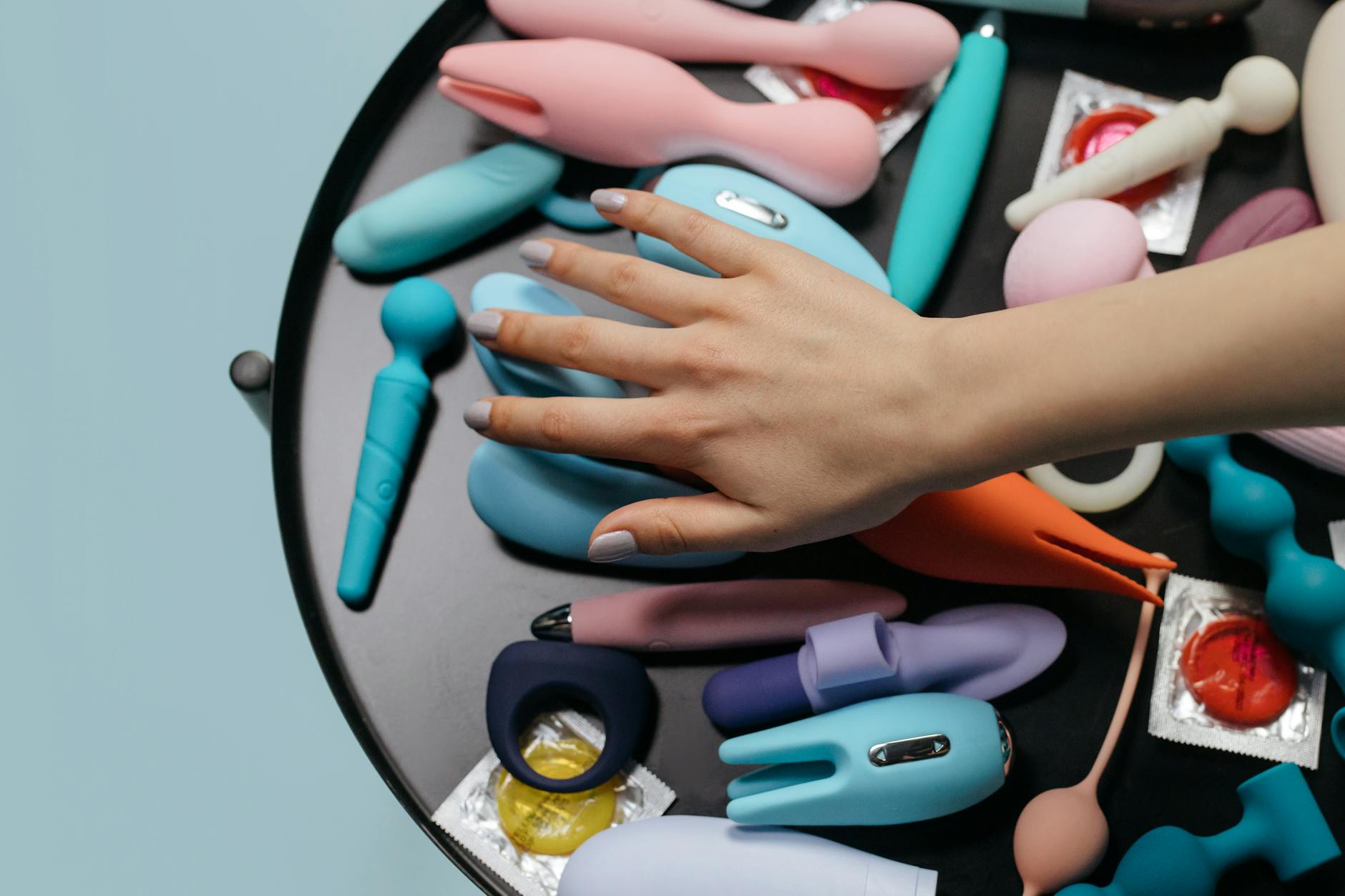
Let's talk about the thing nobody mentions
Desire mismatch is not a red flag. It's normal. I've worked with hundreds of couples, and I can tell you with confidence: almost every long-term partnership has one person who wants sex more often than the other. The silence around this issue is louder than the problem itself.
Here's what happens instead. The higher-desire partner feels rejected. The lower-desire partner feels pressured. Both people start avoiding conversations about sex altogether, which turns a scheduling issue into an intimacy crisis. A lemon vibrator or clitoral vibrator doesn't fix a broken partnership, but it does solve the specific problem of desire mismatch in a way that actually works.
Why the mismatch matters more than the gap itself
The number isn't what hurts. One partner wanting sex twice a month and the other wanting it three times a week is a completely manageable difference. What damages the relationship is the story that builds around it. The higher-desire partner starts thinking, "They don't want me." The lower-desire partner starts thinking, "They only care about sex." Both stories are usually false, and both are relationship killers.
Research on couples shows that desire mismatch becomes destructive when partners treat it as a personal rejection instead of a logistical difference. When you can separate "I want sex more often" from "You don't love me enough," the entire dynamic shifts.
A lemon clitoral vibrator or lemon sexual toy becomes useful here because it offers a third option that most couples never consider: the higher-desire partner can take care of their own pleasure without waiting, and the lower-desire partner doesn't have to perform on a schedule they can't meet.
The specific conversation that changes everything
Before you introduce a toy into the mix, you need to have a conversation that most couples skip. Not during sex. Not right before bed. During the daytime, when you're both calm and there's no performance expectation hanging over the conversation.
The conversation sounds like this:
"I've noticed we have different ideas about how often we want sex. That's normal, and it's not anyone's fault. But I think we've been treating it like a rejection, and that's making things harder. I want us to figure out a way that works for both of us. Sometimes that might mean I take care of my own pleasure, and sometimes we come together. Would you be open to exploring that?"
Notice what's missing: blame, demand, guilt, or pressure. You're naming the pattern without weaponizing it. Most lower-desire partners feel enormous relief when they hear this, because they've been carrying guilt about "not being enough." They haven't, and when you say that clearly, the whole conversation opens up.
How a lemon vibrator actually solves the scheduling problem
Here's the practical part. The higher-desire partner uses a lemon clitoral vibrator on their own, on their schedule, without waiting for their partner to be in the mood. This sounds simple, and it is. But it removes the entire layer of rejection and pressure that was making both people miserable.
When you're not dependent on your partner's desire to meet your own needs, something unexpected happens: you stop resenting them for having different needs. The pressure lifts. And when the pressure lifts, lower-desire partners often find that they want sex more frequently. Not because they're performing, but because sex stopped feeling like an obligation.
This is not hypothetical. I've seen couples who went from arguing about sex every week to actually wanting to be intimate more often, simply because they took the desperation out of the dynamic. A lemon sucker or vibrator becomes the tool that makes that possible.
The logistics that matter
Three things make this work practically:
Privacy and timing. The higher-desire partner needs to be able to use their lemon vibrator without an audience or commentary. That might mean a locked bathroom, a time when your partner is asleep, or a room with a door that closes. The goal is pleasure without performance. You're not hiding; you're being respectful of your partner's boundaries while taking care of yourself.
Zero expectation that it leads to partnered sex. This is crucial. Using a lem vibrator on your own is not foreplay. It's not an invitation. It's you taking care of you. When you approach it that way, it stops feeling like a backdoor attempt to get your partner in bed. Lower-desire partners are incredibly attuned to this kind of subtle pressure, and removing it entirely changes everything.
Separate from partnered intimacy. The sex you have together should feel different from solo pleasure. When couples conflate the two, they end up competing with the vibrator instead of understanding that they serve different purposes. You use a clitoral vibrator solo because you want that specific kind of stimulation. You have sex with your partner because you want connection, vulnerability, and them specifically. Those are different things.
What shifts when the pressure is off
I work with couples where the lower-desire partner didn't realize they actually enjoyed sex until the higher-desire partner stopped expecting it. That sounds counterintuitive, but here's what's happening: when you remove performance anxiety and scheduled obligation, people often discover they actually like pleasure. They just liked the pressure less.
Some lower-desire partners find they want sex once a week instead of twice a month. Some stay at twice a month and stop feeling guilty about it. The frequency almost doesn't matter. What matters is that both partners stop treating desire mismatch as evidence of something being wrong with the relationship.
Solo play with a lemon clitoral vibrator gives the higher-desire partner an outlet that doesn't depend on their partner's mood or capacity. And that permission changes the tone of the entire relationship. Resentment shrinks. Affection grows. You'd be surprised how much better you treat someone when you're not sexually frustrated with them.
When to bring it up and how to actually say it
Start with conversation first. "I've been thinking about how to handle our different needs around sex. I was wondering if you'd be open to me exploring solo pleasure more, so that I'm not putting pressure on you when you're not in the mood. That way you don't feel obligated, and I still get what I need." Most lower-desire partners respond with relief.
Then, when you do introduce a toy, keep it separate from partnered sex. Don't use it in bed next to your partner unless you've explicitly agreed that's what you both want. Use it alone. Enjoy it. And then, separately, maintain whatever intimate life you do share together.
If your partner wants to know about it, be honest. "I've been using this lemon sexual toy when I want to take care of my own pleasure. It's not a replacement for being with you; it's just something for me." That's it. No apology, no over-explanation. Shame makes everything weird.
The bridge between mismatched desires
A lemon vibrator won't fix a relationship where the real problem is something else entirely. If you're mismatched in desire because you're also mismatched in communication, values, or emotional intimacy, you need to address those things too. But if your partnership is solid and you're just frustrated by how often you want sex compared to your partner, this actually works.
What I've seen over decades of working with couples is this: desire mismatch becomes a crisis when both people feel like they're losing. The higher-desire partner loses sex. The lower-desire partner loses peace. A tool like a lemon clitoral vibrator lets both people win. One partner gets their needs met without dependence or resentment. The other gets to stop feeling pressure and guilty. The relationship gets to be about connection again instead of negotiation.
Start with the conversation. Then, if you're the higher-desire partner, give yourself permission to take care of your own pleasure. You deserve it. Your partner deserves to not feel obligated. And your relationship deserves to stop spinning around who wants sex how much.
FAQ: Long-tail questions about lemon vibrators and desire mismatch
Can using a lemon vibrator solo actually improve your partnered sex life?
Yes, but not directly. What improves is the dynamic. When you remove pressure and resentment from the relationship, partnered sex becomes about connection instead of obligation or performance. Many couples find they enjoy sex together more when the higher-desire partner isn't desperate and the lower-desire partner isn't pressured. The lemon clitoral vibrator isn't magic; it's just the thing that lets both people breathe.
Is using a lemon sucker or vibrator alone a sign of a failing relationship?
Absolutely not. Solo play is normal in every relationship, mismatched desire or not. It's not a substitute for partnered intimacy; it's part of a full sexual life. The only time it becomes a problem is if you're using it to avoid your partner instead of to complement your partnership. If the conversation and the honesty are there, solo pleasure actually strengthens things.
How do I bring up using a lemon vibrator if my partner is lower-desire and I think they'll feel threatened?
First, understand what they're actually worried about. Most lower-desire partners aren't threatened by a lem vibrator; they're relieved it means they don't have to perform. Start with, "I want to take pressure off you." That usually lands differently than "I want to take care of my own pleasure," even though both are true. Lower-desire partners respond well to knowing they're not letting you down. Naming that explicitly changes everything.
What if my partner wants to watch or participate when I use a lemon clitoral vibrator?
That's a separate negotiation, and it's worth having. Some couples love that. Some couples don't. There's no rule. Just be clear about your own boundaries first. If you want solo time with your lemon sexual toy, you get to have that. If your partner is interested in watching or being involved, you can explore that separately. Don't let boundary confusion turn into resentment.
If my partner is lower-desire, does using a lemon vibrator solo mean we'll never have sex again?
No. What it usually means is that sex becomes something you both actually want instead of something one person is waiting for and the other is avoiding. Desire mismatch is often less about actual desire and more about pressure. Remove the pressure, and the desire sometimes returns. Not always at the same frequency, but with better quality and less resentment.
How often should I use a clitoral vibrator if my partner and I are mismatched?
As often as you want. There's no rule. Some people use a lemon vibrator once a week; some use it three times a week. The goal isn't to solve the mismatch by yourself. It's to stop the mismatch from creating resentment. Use it when you need to. Talk about it when it matters. Keep the focus on the relationship dynamic, not the frequency.
The actual point
Desire mismatch is one of the most common relationship challenges I see, and one of the easiest to fix once you stop treating it as a personal rejection. A lemon clitoral vibrator or lemon sexual toy isn't about replacing your partner. It's about giving both of you permission to have different needs without that difference becoming a wound.
Start with honesty. Then, if it fits, add the tool. Your relationship will probably be better for it.