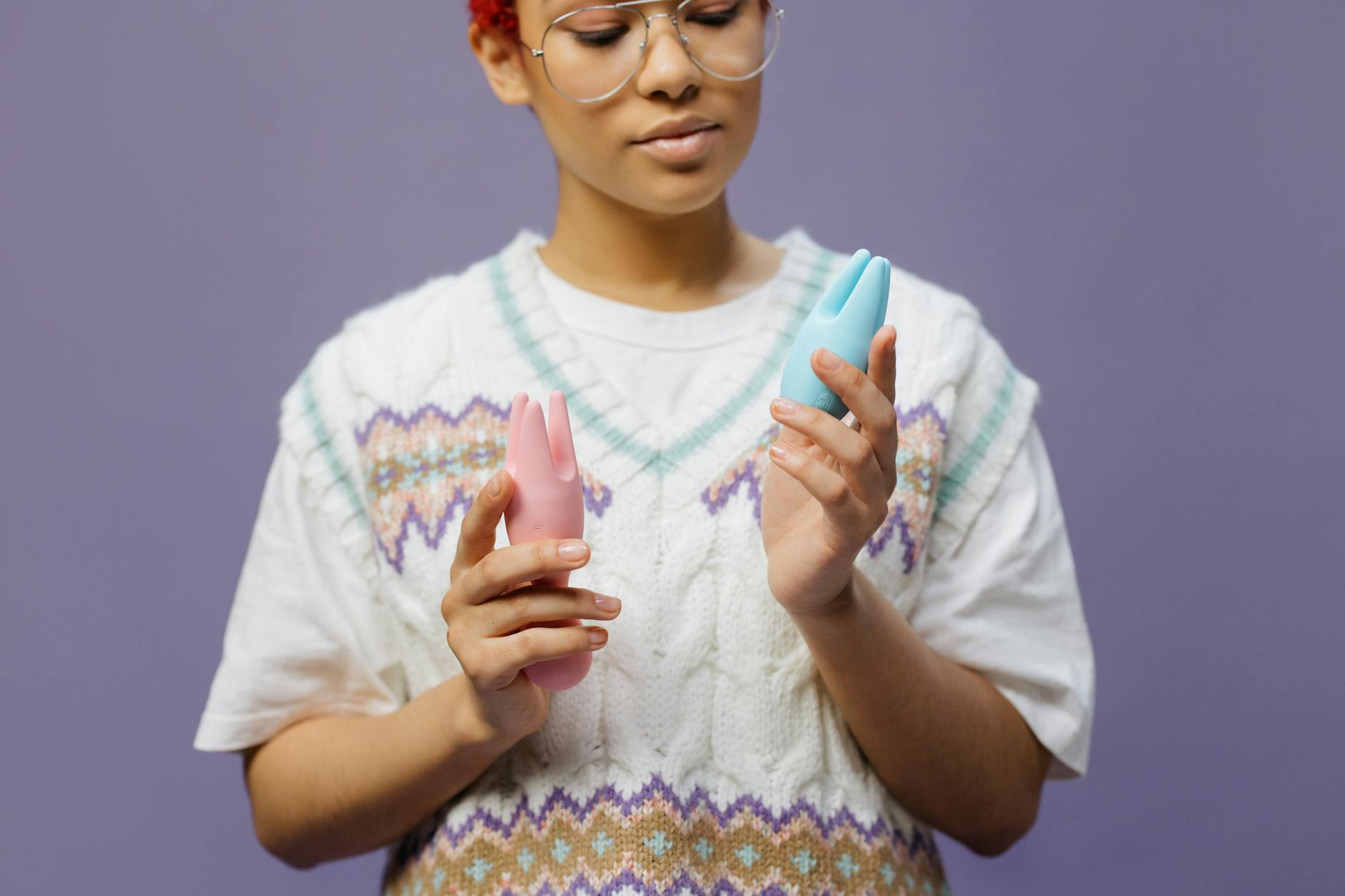
How to Use a Lemon Vibrator When Your Partner Avoids Intimacy
Let's be real. When your partner consistently avoids sex, it's not just about missing physical touch. It's rejection. It's confusion. It's wondering if something's wrong with you, or them, or the relationship itself. And it's incredibly common.
One of the most frequent conversations I have with clients isn't about technique or positions. It's about what to do when the person they love stops wanting them. A lemon vibrator, or any clitoral vibrator, can't fix that gap. But it can help you keep your own pleasure and self-worth intact while you figure out what's actually happening.
Why partners pull away from sex
Partner avoidance usually has almost nothing to do with you. It's almost never "I don't find you attractive anymore." That line lives in movie scripts, not real relationships.
Here's what actually drives intimacy avoidance:
Stress and burnout kill desire faster than anything else. Work pressure, financial worry, parenting exhaustion. These aren't sexy feelings. When someone's nervous system is in overdrive, sex feels like one more demand instead of relief.
Depression and anxiety shrink the body's capacity for pleasure. Not because they're unmotivated. Because depression says "everything is pointless" and anxiety says "something bad will happen if you relax." Sex requires both motivation and relaxation.
Unresolved resentment poisons the bedroom. If you've been arguing about housework, money, or emotional labor, your partner's body knows. The nervous system doesn't separate "I'm mad about the dishes" from "I can't be vulnerable right now."
Medical issues. Low testosterone, erectile dysfunction, thyroid problems, medication side effects. These are real, they're treatable, and they're embarrassing. So people avoid talking about them, which means they avoid sex entirely.
Sometimes it's not about you. Sometimes it's about them, and sometimes it's about both of you building a relationship pattern where sex stopped being a priority.
Why solo pleasure matters when your partner pulls away
Here's what I tell people: Using a lemon vibrator solo when your partner avoids intimacy isn't cheating on your relationship. It's not a replacement for fixing what's broken. It's maintenance.
When you stop having orgasms, something shifts psychologically. Your body starts to believe it doesn't deserve pleasure. You internalize the rejection. You start avoiding your own touch because it feels like a reminder of what's missing. That's a dangerous spiral.
Maintaining your own pleasure solo does three critical things.
First, it keeps your nervous system regulated. Orgasms release oxytocin, dopamine, and serotonin. They lower cortisol. They remind your body that pleasure is available to you, even if it's not currently available from your partner.
Second, it preserves your sense of self. You are a person with sexual needs and capacity, regardless of what your partner is or isn't doing right now. That matters.
Third, and this is important: A partner who knows you're taking care of your own pleasure often responds differently than a partner who watches you slowly disappear. Some partners actually get more interested when they realize sex isn't going away. Others get defensive. But at minimum, you're not building a narrative where your desire simply vanishes because theirs did.
How to use a clitoral vibrator when intimacy feels charged
The logistics of solo pleasure when you share a home or life with someone avoiding you can feel tricky. Here are the practical moves.
Privacy first. You need actual, guaranteed privacy. Not "they're probably occupied." Locked door, white noise machine, phone on silent. This is non-negotiable because your nervous system won't relax without it. Arousal requires safety. If part of your brain is listening for footsteps, your body won't respond fully.
Start when you're actually alone. If you have kids, wait until they're asleep. If you have roommates, use a time when they're definitely out. Don't rush pleasure into a 12-minute window between meetings. That's not pleasure. That's checking a box.
Use a lemon vibrator or other clitoral vibrator instead of penetrative options. Air-pulse or suction-based clitoral vibrators like the Lem create focused stimulation without requiring arousal to build as gradually as penetration does. When your confidence is shaken by partner avoidance, external clitoral stimulation is more reliable. It's not about your body responding correctly. It's about giving your nervous system what it actually needs.
Lubrication matters more than you think. When you're solo and not sharing touch with anyone, lubrication stops being a nice addition and becomes essential. It reduces friction, increases sensation, and honestly, applying it is often the first moment your body genuinely relaxes into pleasure instead of performance.
Longer sessions beat intensity chasing. Don't white-knuckle your way to orgasm. Set 20-30 minutes aside, use low patterns on the vibrator first, let arousal build slowly. This isn't the sprint-to-the-finish solo sex of your 20s. This is the kind of solo pleasure that actually rewires your nervous system away from rejection and toward self-care.
The conversation you actually need to have
Using a lemon vibrator solo is helpful. But solo pleasure isn't a solution to partner avoidance. It's a holding pattern while you do the real work, which is talking to your partner.
Don't have this conversation during or right after sex. Don't have it when either of you is already frustrated about something else. Pick a neutral time, maybe over coffee, somewhere you can't be easily interrupted.
Start with curiosity, not accusation. "I've noticed we haven't been intimate in a while. I miss it. I'm wondering what's going on for you." Not "You never want sex anymore." The second version is armor. The first opens a door.
Listen to what they actually say. If they say stress, ask what's stressing them. If they say they're tired, ask what would help. If they say they don't know, believe them. Sometimes people genuinely don't understand why their own desire has disappeared.
Be honest about what avoidance costs you. "When we're not intimate, I start to feel rejected. I need to know if this is temporary or if something bigger is happening." This is vulnerable. It's also necessary.
If they're willing, suggest seeing a couples therapist. Not because the relationship is ending. Because desire mismatches are genuinely easier to navigate with professional help. A therapist can help you both understand what's actually driving the avoidance and what reconnection might look like.
If they're not willing to talk or change, that's information too. That tells you something about how your partner manages conflict and vulnerability. That's worth thinking about carefully.
When to accept this might be a dealbreaker
I want to be gentle here, but also honest. Some relationships survive long-term intimacy avoidance. Some don't.
If your partner is willing to talk and work on it, there's a real path forward. Therapy, medical evaluation, couples workshops. These things shift things.
If your partner refuses to engage at all. If they deny there's a problem. If they get defensive and punishing when you bring it up. That's a different story. You can't fix something the other person won't acknowledge.
Using a lemon vibrator or any clitoral vibrator to maintain your own pleasure and sanity while in that situation is wise. But it's not a permanent solution. It's a temporary way to stay connected to yourself while you figure out whether this relationship can evolve.
Your pleasure matters. Your need for physical intimacy matters. And your worth doesn't depend on whether your partner currently has access to desire.
FAQ: Intimacy avoidance and solo pleasure
Can using a vibrator solo make my partner less interested in sex with me?
Theoretically, some partners feel threatened by solo pleasure. Practically, that's rare and usually reflects their own insecurity. More common: a partner who sees you maintaining your own pleasure starts to feel less guilty and sometimes even gets curious. A partner who avoids intimacy entirely probably won't even know or care. And honestly? If your partner would rather you suffer alone than know you're taking care of yourself, that's worth examining.
Should I tell my partner I'm using a vibrator when they're avoiding intimacy?
No hard rule. Some couples benefit from honesty and it actually opens conversation. Others use it as ammunition. Know your partner. Know your relationship. If transparency would create safety and dialogue, go for it. If it would create a bigger fight, keep your privacy and focus on the actual conversation about desire.
How often should I use a clitoral vibrator if my partner's avoidance is ongoing?
As often as you need to. There's no "too much." Solo pleasure isn't a replacement for partner sex, but it's also not frivolous. If you need an orgasm three times a week to feel like yourself, that's your baseline. Honor it.
Is using a lemon vibrator while in this situation cheating?
No. Solo pleasure, by definition, is solo. You're not sharing it with someone else. You're taking care of your own body. That's fidelity to yourself.
What if my partner finds out and gets upset?
That's their work to do, not yours. A partner's anger about your solo pleasure usually points to deeper insecurity or control issues. Those are real and they're worth addressing, but they're not a reason to deny yourself basic self-care.
Can a vibrator actually help me feel less rejected?
Yes and no. Orgasms do genuinely improve mood and reduce stress hormones. Regular pleasure does help you feel more like yourself. But they can't fix the emotional hurt of being rejected by someone you love. Only an actual conversation and change can do that. Use solo pleasure as self-care while you're working on the relationship part.
The bottom line
When your partner avoids intimacy, using a lemon vibrator or clitoral vibrator solo isn't a bandage. It's a way to stay connected to your own body and pleasure while you figure out what's really happening in your relationship. It keeps you from internalizing rejection as truth.
But solo pleasure is also a signal. It's telling you something needs to shift with your partner. And that conversation matters more than any vibrator ever will.
If you want help thinking through how to have that conversation, or how to navigate a relationship where intimacy has stalled, I'm here. Reach out at /contact and let's talk about what you actually need right now.