Let's start with what nobody tells you
Increased clitoral sensitivity with age is not a problem. It's actually a sign that your nervous system is becoming more responsive, not less. The catch? If you've been using the same approach to pleasure for 20 years, suddenly having more sensation can feel overwhelming instead of good.
Here's what's real: as estrogen shifts and your body changes, nerve density in the clitoris doesn't drop. Instead, your sensitivity to touch often intensifies. The tissue surrounding the clitoris thins slightly, bringing nerve endings closer to the surface. That means less pressure needed to create sensation, and sometimes sensation that feels almost too much. A lemon clitoral vibrator, with its precise suction design, becomes less about adding stimulation and more about controlling it.
Why your sensitivity might feel sharper now
Three physiological shifts happen together:
Thinning of protective tissue. The layer of tissue covering the clitoris becomes thinner as estrogen declines. Your nerve endings sit closer to the surface, which means they react to gentler touch. This is the same reason a light fingertip touch might feel more intense than a firm grip.
Changes in blood flow patterns. Blood vessels respond differently to arousal cues as you age. Some people experience faster, more concentrated engorgement in the clitoris itself. Others notice the sensation moves around differently than it used to.
Nervous system recalibration. Your brain has spent decades learning how to interpret clitoral sensation. Sometimes it recalibrates during midlife transitions, making familiar sensations feel brand new. This isn't psychological. It's neurology.

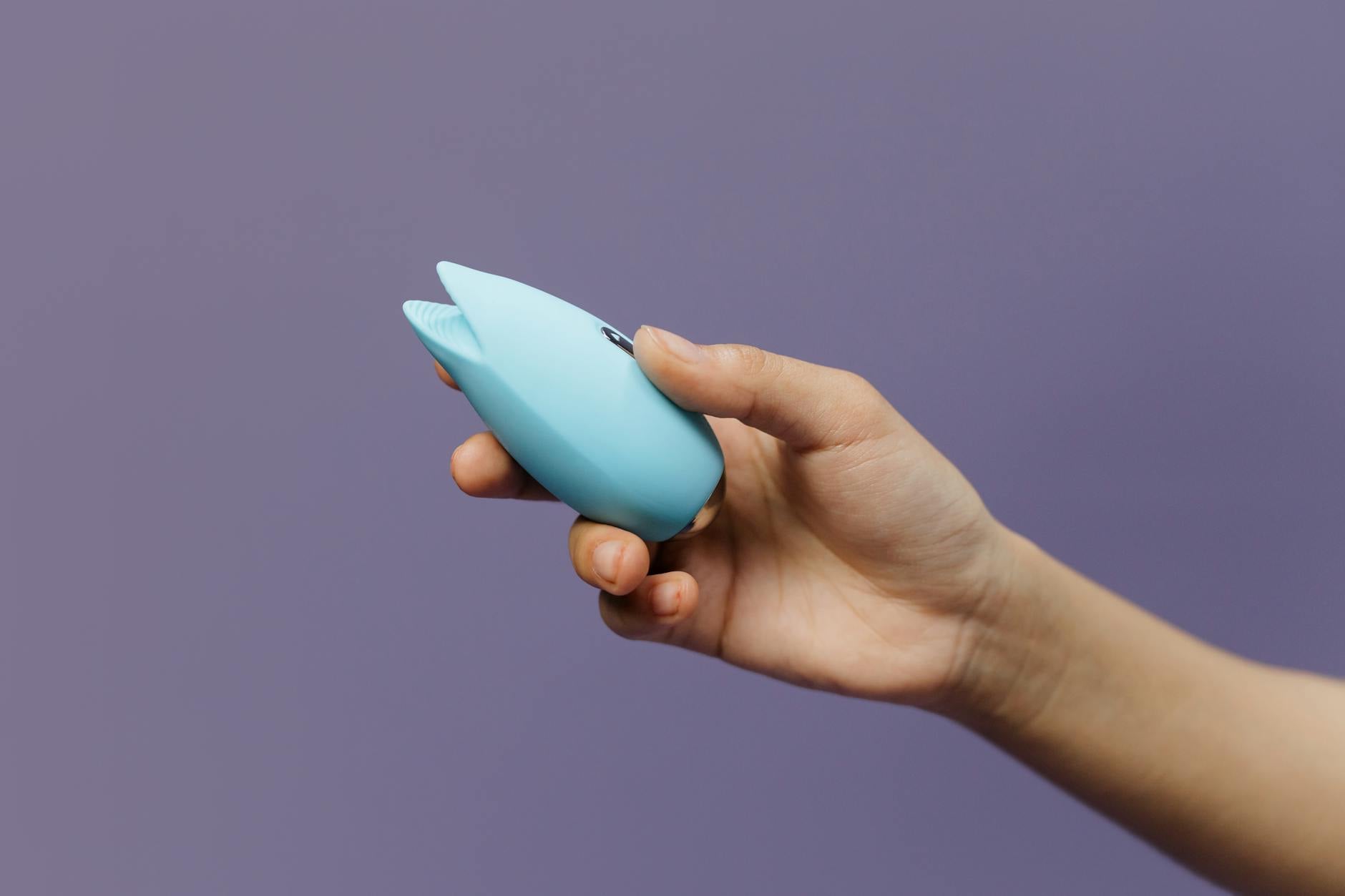
Photo by Frank Schrader on Pexels
The lemon vibrator advantage for sensitive tissue
This is where air-suction technology shines. A traditional lemon vibrator (like the Lem) uses gentle pulsing suction rather than direct vibration. For people dealing with increased clitoral sensitivity, this matters enormously.
Direct vibration can feel sharp or even painful when nerve endings are already firing aggressively. Suction distributes the sensation across the whole clitoral head instead of concentrating it on one spot. You're getting stimulation without the feel of a buzzing point of contact.
Start at the lowest setting. Most people with increased sensitivity skip right past patterns 1 and 2 because they're cautious. Don't. Spend time at the gentlest pulse. Let your body get used to the sensation before you increase. The beauty of a lemon vibrator is that even the lower settings create real sensation. You're not sacrificing pleasure for gentleness.
Adjusting your technique when sensation feels too intense
Here are the practical moves I recommend:
Move the toy around more, stay in one place less. If you're used to holding a vibrator still on your clitoris, change your approach. With a lemon vibrator, let it glide slightly. Hold it at a slightly different angle every 20 to 30 seconds. This prevents the sensation from building into overwhelm.
Add a barrier. Using the toy through underwear or a thin layer of fabric softens the sensation without losing it. You're still getting stimulation, but it's buffered. This sounds like a workaround, but many people find their best sensation happens this way.
Extend your warm-up period. Give your body 20 to 25 minutes of non-genital touch before you use the lemon vibrator. Massage, kissing, touching other areas. Your clitoris will respond better to stimulation when you're already aroused from other sources.
Separate arousal from orgasm. Don't assume you need to use the toy to come. Sometimes the best approach is using it for pleasure and sensation without performance pressure. You might come, you might not. Either way, you've had 10 minutes of really good feeling, and that's the goal.
The mental side of heightened sensitivity
Many people with increased clitoral sensitivity also experience what feels like anxiety during sex. Your nervous system is firing faster, sensation is sharper, and your brain sometimes interprets that as "something's wrong." It's not.
This is where I usually recommend a reframe: you're not broken. You're simply operating with more sensitivity. The same way you'd turn down the volume on a speaker that's too loud, you turn down the input through technique, positioning, and timing.
If you're partnered, communicate this shift clearly. "My sensitivity has changed, and I need to approach things differently" is a complete sentence. You don't owe anyone a performance. You owe yourself pleasure that actually feels good.
When you're solo, the pressure is different but equally real. Many people feel rushed or obligated to come when using a toy. Release that expectation. Let yourself explore what sensation feels genuinely good right now, in this version of your body.
When to see someone about hypersensitivity
If touch to your clitoris causes actual pain, not just intense sensation, that's worth discussing with a gynecologist. Conditions like neuropathy or nerve compression can cause clitoral pain that isn't related to normal aging shifts.
Similarly, if your sensitivity increased suddenly and hasn't plateaued, mention it. Sometimes medication changes, hormonal shifts, or other health factors create temporary hypersensitivity that settles down with time or treatment.
But if increased sensation is just sensation? That's not a medical problem. It's an adjustment in approach. A lemon vibrator, with its adjustable patterns and suction design, is specifically built for this kind of fine-tuning.
The rhythm reset that actually works
Here's a practical sequence I see work well: start at pattern 1, spend 3 to 5 minutes there, then move to pattern 2 for the same duration. Pause. Take your hands and touch yourself manually. Notice the difference in sensation. Use the toy again at pattern 2 for 2 to 3 minutes. Most of the time, your body will let you know when it's ready to increase. You don't have to guess.
If you're approaching orgasm and it feels too intense, slow down or step back. There's no timer. You can spend 45 minutes in low-intensity sensation and still have a complete, satisfying experience.
The goal here is rebuilding trust in your own body. Years of "push through" or "ignore it" can make heightened sensation feel like a malfunction. It's not. It's information. Your body is telling you what it needs, and a lemon vibrator gives you the tool to listen.
Why this matters beyond the bedroom
How you approach pleasure at 45 or 55 or 65 shapes how you think about your body. If increased sensitivity makes you feel broken, you'll avoid solo pleasure and avoid asking partners for what you need. If you see it as a new variable to work with, you get curious instead of ashamed.
A clitoral vibrator isn't a workaround for aging. It's a tool that matches your body's changing needs. The lemon vibrator's design is especially useful here because it's responsive enough to feel good and gentle enough to control. You're not fighting your sensitivity. You're working with it.
Frequently asked questions
How long does it take to adjust to increased clitoral sensitivity?
Most people notice adaptation within 2 to 3 weeks of adjusting their technique. Your nervous system learns quickly. If you're consistently using the same approach—starting low, moving the toy, extending warm-up time—your brain and body will synchronize with the new sensitivity baseline. Some people feel better almost immediately once they stop fighting the sensation and start working with it.
Is clitoral pain the same as clitoral sensitivity?
No. Sensitivity means you feel sensation more quickly or more intensely. Pain means touch causes discomfort or hurt. Sensitivity is normal and common with age. Pain is a sign something else might be going on and deserves professional attention. If you're unsure which you're experiencing, a gynecologist can help clarify.
Can I still use my lemon vibrator on higher patterns, or do I need to stay low?
You can absolutely use higher patterns. The key is listening to your body instead of following a script. Some days you might want pattern 1 for the entire session. Other days, you'll work up to pattern 4 or 5. There's no wrong choice. Think of it like volume on a speaker: sometimes you want ambient music, sometimes you want it louder. Both are valid.
Will increased sensitivity go away, or is it permanent?
Sensitivity often stabilizes over time. It doesn't usually go away completely, but your body adapts and learns how to interpret and enjoy the sensation. It's similar to how your eyes adjust to a brightly lit room. After a few minutes, the brightness doesn't feel overwhelming anymore, even though the light level hasn't changed. The adaptation happens in your nervous system.
Does this happen to everyone as they age?
No. Some people experience increased sensitivity, some notice no change, and some experience decreased sensitivity. Your genetics, overall health, hormone levels, and individual nervous system all play a role. There's no universal timeline. What matters is understanding your own body's pattern, not comparing yourself to anyone else's experience.
Can a partner help me explore increased sensitivity, or is this better solo?
Both work, depending on your comfort level. Solo exploration lets you move at your own pace without performance pressure. With a partner, communication is essential. Explain what feels good and what doesn't. Use the toy together to show them what's shifted. Some couples find that adjusting together actually deepens intimacy because you're problem-solving as a team, not managing it alone.
Your body's changes aren't a step backward. They're information. A lemon vibrator gives you a way to listen to that information and respond with pleasure instead of frustration. Start gentle, stay curious, and trust that your nervous system knows what it needs.