The thing nobody tells you about arousal after midlife
You're not slower. Your nervous system just changed its speed limit. And honestly, once you stop fighting that shift, pleasure actually deepens.
Somewhere between 35 and 45, the timeline from "I could be interested" to "I'm actually aroused" stretches. What used to take five minutes takes twenty. What used to happen passively now requires active attention. This isn't a glitch. It's not a sign of declining desire. It's a normal, measurable shift in how blood flows, how nerves respond, and how your brain processes sensation. Understanding why this happens changes everything about how you approach pleasure at this stage of your life.
Why arousal slows down (the biology piece)
Three things shift physiologically in midlife:
Blood flow patterns change. Younger bodies direct blood to the genitals quickly and generously in response to arousal cues. After 40, that response becomes more gradual. Estrogen levels (even if you're not in menopause) begin their slow decline, which affects tissue sensitivity and vascular response. This isn't permanent or catastrophic. It just means the ramp-up is longer.
Neurological response time increases slightly. Your clitoris has thousands of nerve endings, but the speed at which those nerves fire and communicate with your brain shifts a bit over time. The nerves aren't dying. The signal is just more deliberate. For many people, this actually means sensations become sharper and more defined, not duller.
Cognitive load changes how quickly desire builds. Your brain is still processing work stress, family stuff, and life logistics in the background. Younger bodies sometimes override that mental noise through sheer hormonal force. Midlife arousal requires more intentional mental space. You're not less sexual. You're just less able to ignore what's happening in the other rooms of your life.
What this actually means during sex
Instead of spontaneous arousal that arrives uninvited, you're working with what I call "responsive arousal." Your body responds beautifully to the right stimulus, but that stimulus needs to be present and consistent for longer than you're used to.
This is where most midlife couples hit friction. One partner expects the old timeline. The other feels rushed or pressured. Then desire actually tanks because now there's performance anxiety layered on top of biology.
Here's the reframe: responsive arousal isn't a downgrade. It's actually more controllable. You get to choose what goes into building it, and you can be strategic about it.
How lemon vibrators fit into the longer timeline
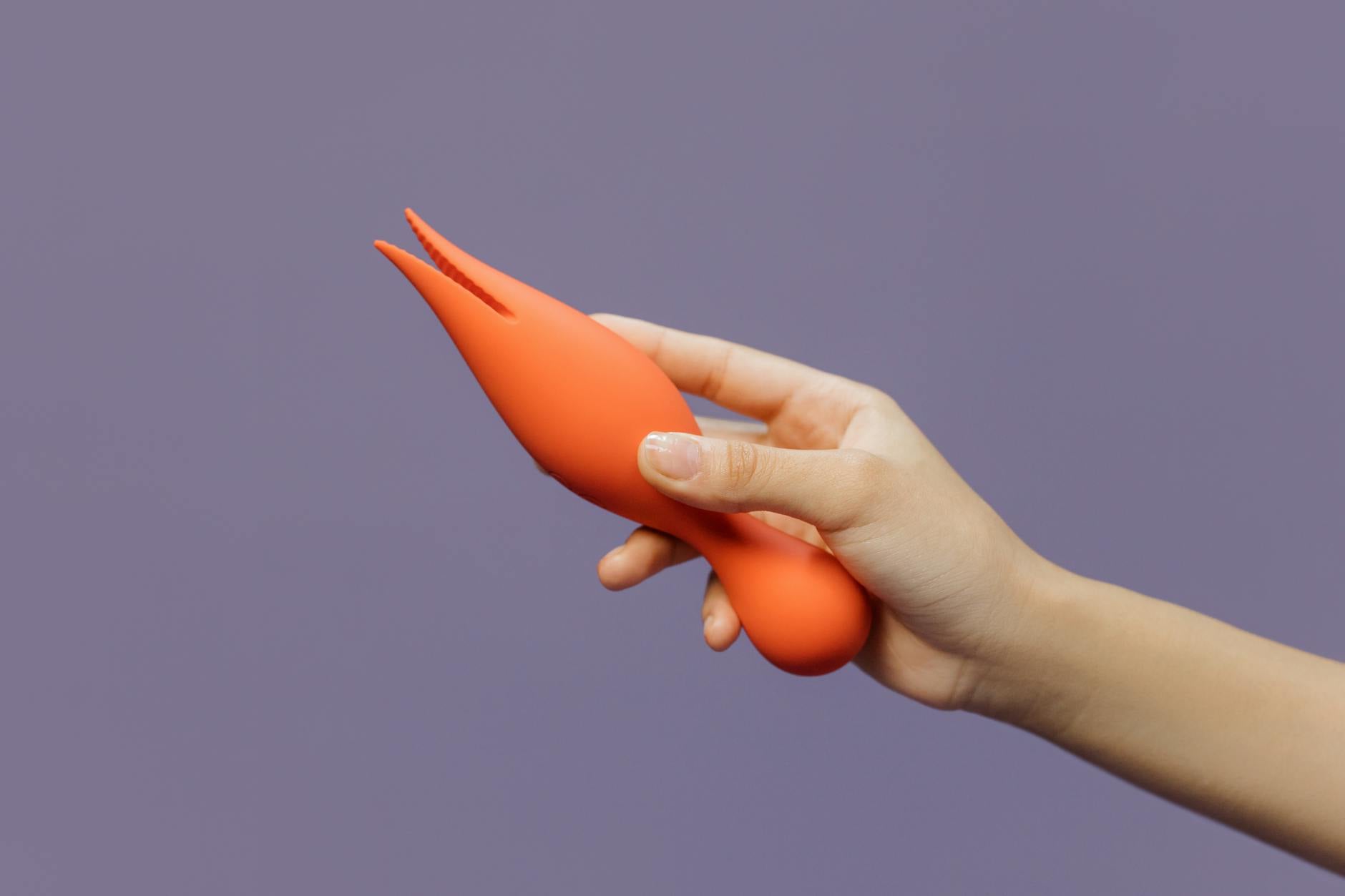
A lemon clitoral vibrator like the Lem works with longer arousal timelines because it provides consistent, controllable stimulation while you're ramping up.
Instead of waiting for your body to self-generate arousal, you're offering it direct neural input. The suction and pulsation patterns stimulate the thousands of nerve endings in your clitoris without requiring you to generate your own friction. Your nervous system has something concrete to respond to, which actually accelerates arousal even if the initial response is slower.
The key is starting early and giving yourself permission to take the full timeline.
The actual protocol that works
Here's what I recommend to clients navigating this shift:
Step one: Budget time differently. Don't expect arousal to arrive in the first five minutes. Plan for 20-25 minutes of buildup. This isn't punishment. This is you being realistic about your own physiology and respecting it.
Step two: Start before you feel ready. This sounds counterintuitive, but responsive arousal works better when you initiate stimulation before your body is screaming for it. Use your lemon vibrator on lower patterns (1-3) while you're still in the early stages of interest. Your nervous system catches up as stimulation continues.
Step three: Layer in mental space. Put your phone away. Close the door. Let your brain know this is protected time. The longer timeline after 40 partly reflects that your brain needs more permission to drop other tasks and focus on sensation. That's not a flaw. That's your body telling you it needs you present.
Step four: Use pattern switching as your pacing tool. The Lem has multiple patterns and intensities. Use this. Start at a lower, slower pattern and gradually increase over 10-15 minutes. This matches how your nervous system is now wired. You're not ramping up fastest. You're ramping up steadily.
Step five: Don't equate longer arousal with less pleasure. This is the biggest mental hurdle. Many people interpret a longer timeline as meaning the eventual payoff will be smaller. It's actually the opposite. The longer buildup often produces more intense, more complex orgasms because more neural pathways are engaged.
When to involve a partner
If you have a partner, separate conversations help:
Conversation one: "My arousal timeline has shifted, and that's normal. Here's what helps." (This is not about their performance. It's about your physiology.)
Conversation two: "I want us to explore this together." (This is about collaboration, not accommodation.)
Many couples actually find that slowed timelines create more foreplay, more presence, and more mutual discovery. The pressure to "get there" eases, and you both end up more satisfied.
If you're solo, the lemon vibrator becomes your collaborator. You're not waiting for external timing to align. You're setting the pace entirely.
The pattern intensity question
Here's something specific: after 40, you don't necessarily need more intensity. You need the right pattern consistency. Many people think "slower arousal means I need stronger stimulation." That's often backward. You usually need longer, steadier stimulation at moderate intensity rather than brief bursts at maximum power.
The Lem's range of patterns lets you stay in a sweet spot for longer without overshooting. You're not fighting desensitization. You're matching your nervous system's actual pace.
Common friction points and fixes
"It takes so long that I lose focus." That's the cue to add novelty. Change positions. Use a different hand. Ask your partner something unexpected. Your brain needs engagement, not endless repetition.
"My partner finishes before I'm even close." This is the number-one tension point. The fix: separate timelines. If you're having partnered sex, start your arousal sequence alone first (with your lemon vibrator) while your partner does whatever preps them. Then come together when you're closer to where you want to be. This takes pressure off both of you.
"I used to come fast. Now I feel broken." You're not. Your body is just operating under different rules. The adjustment is mental before it's physical. Give yourself three to four weeks of consistent solo exploration before you decide anything is "wrong."
The midlife advantage you're not thinking about
Here's what nobody says: the shift in arousal timing often coincides with a shift in what actually feels good. Many people find that at 40-plus, they finally know what they want. The pressure to be someone else's fantasy drops away. Your own pleasure becomes legible to you in a way it maybe never was.
Slower arousal timelines, paradoxically, often come with better orgasms because you're no longer rushing through pleasure to get to the finish line. You're actually experiencing the journey.
When to check in with a doctor
If arousal completely stalled (like, zero interest across weeks), or if pain accompanies the longer timeline, or if you're on a new medication, those are all worth mentioning to a doctor. Sometimes slower arousal is normal midlife biology. Sometimes it's thyroid stuff, medication side effects, or relationship tension wearing a biological disguise. A good clinician can help you sort.
But if everything feels physically fine and you're just navigating a longer timeline? That's not a medical problem. That's you entering a different chapter of your sexuality. The lemon clitoral vibrator becomes a tool for working with that timeline, not fighting it.
The reframe that changes everything
Instead of "arousal takes longer now," try "I have more control over arousal buildup now." The first story is about decline. The second is about precision. You can actually engineer pleasure more deliberately. You know what works. You have the tools, including effective clitoral vibrators designed for responsive arousal patterns. Use them.
People also ask
Does a lemon vibrator help if arousal feels harder to trigger?
Yes. A lemon clitoral vibrator provides direct neural stimulation that your body doesn't have to generate on its own. Start it early in the arousal process, before you feel ready, and let your nervous system respond. The consistent suction patterns work better for responsive arousal than self-generated sensation alone.
Is it normal for arousal to take 20-30 minutes after 40?
Completely normal. Blood flow changes, hormonal shifts, and cognitive load all contribute to longer arousal timelines in midlife. This isn't decline. It's a natural shift in physiology that actually comes with benefits, including deeper pleasure and more deliberate sensation.
Should I use a higher intensity setting if arousal is slow?
Counter-intuitively, no. Midlife arousal often responds better to longer sessions at moderate intensity than short bursts at maximum power. The Lem's variable patterns let you stay in a sustainable rhythm for the full 20-25 minute buildup without overshooting or desensitizing.
Can a partner's faster arousal timeline create problems?
Yes, and it's fixable. The most common solution: separate your arousal timelines intentionally. Start your own buildup (with a vibrator or solo touch) while your partner does their prep. Meet in the middle when you're closer to aligned. This removes pressure and makes partnered sex feel less like performance and more like collaboration.
Does slower arousal mean my desire is lower?
Not necessarily. Desire and arousal are different things. You can have steady desire but slower arousal triggers. The lemon vibrator bridges that gap by providing the external stimulus your responsive arousal actually needs, helping you get to where you want to be without forcing yourself.
What if I'm on medication that's slowing arousal even more?
That's worth discussing with your prescriber. Some medications (particularly SSRIs and certain blood pressure meds) do slow arousal or make orgasm harder. Timing adjustments, switching medications, or adding a vibrator can all help. Don't just accept it as permanent without exploring options.
Final thought
Arousal doesn't stop after 40. It transforms. The timeline gets longer, but the payoff often gets deeper. A lemon clitoral vibrator isn't a workaround for a broken system. It's a tool designed for how your nervous system actually works now. Use it strategically, give yourself permission to take the full timeline, and you'll likely find that pleasure in midlife is actually more reliable, more intentional, and more genuinely satisfying than it was before.
If you have questions about timing, partners, or using a clitoral vibrator through this shift, reach out. That's what I'm here for.