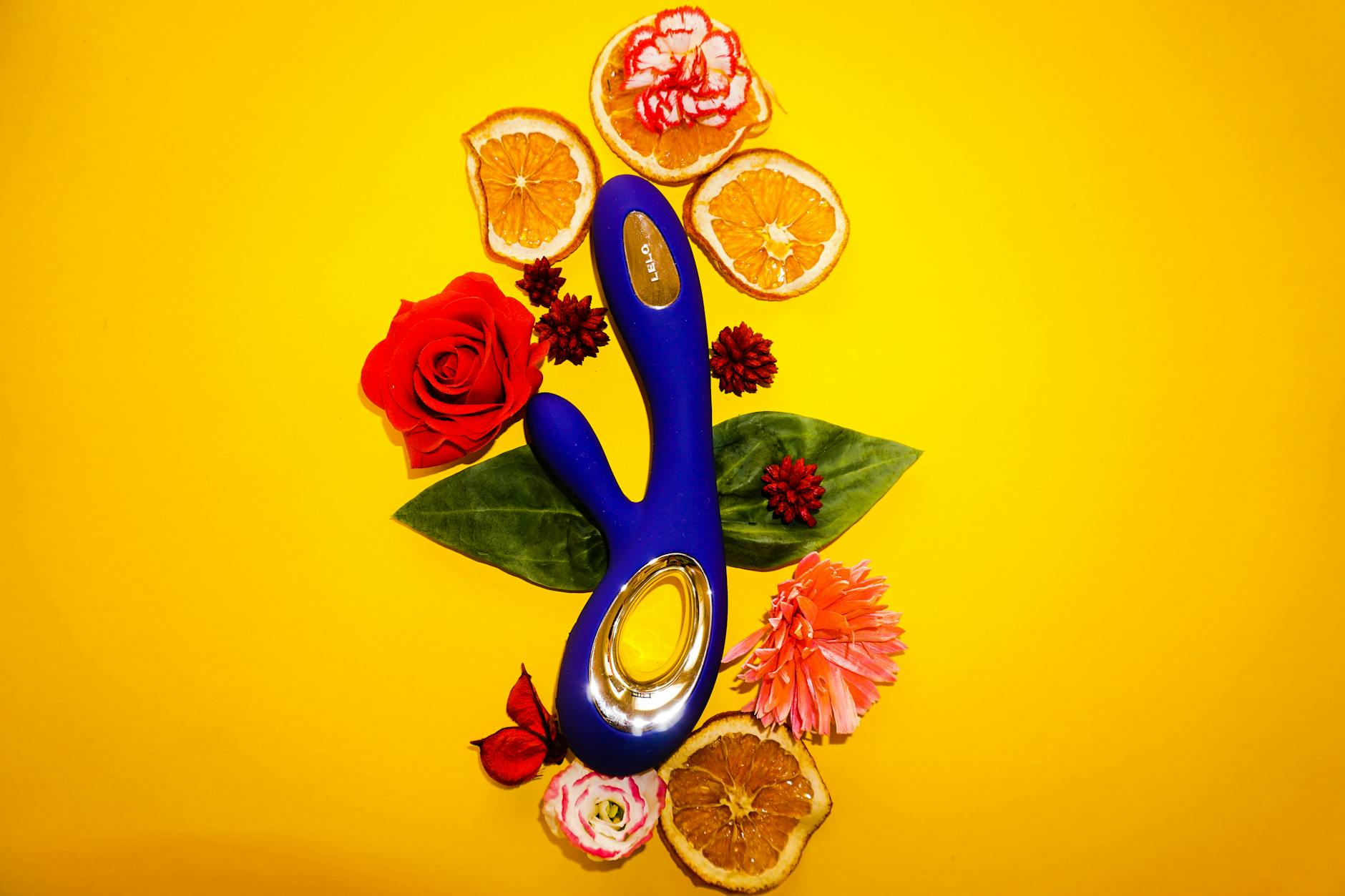
How to Use a Lemon Vibrator When Arousal Feels Difficult After Partner Illness
Let's be honest: when your partner gets sick, sex stops being a priority. Then they recover, and you're both supposed to just slip back into rhythm like nothing happened. Except something did happen. Their body changed. Your anxiety changed. The dynamic changed.
Arousability is not a switch. It's a skill that atrophies when you're in caretaker mode. The good news is that it can come back, and a lemon clitoral vibrator is one of the most efficient tools for remapping your arousal when it's been dormant.
Why arousal becomes difficult after a partner's illness
Your nervous system has spent weeks or months in sympathetic overdrive. You were monitoring their health, managing logistics, keeping everything stable. Your body learned that staying vigilant was more important than feeling pleasure. That's not a character flaw. That's survival.
When a partner is ill, sexual desire often doesn't just lower. It can feel almost disloyal to feel it. You might also carry performance anxiety. Will they have energy? Will it hurt them? Will I hurt them? These questions sit in your pelvis and make arousal feel impossible.
Then there's the practical issue: your partner's body might not be the same. Pain during sex, reduced stamina, medications that affect their response. You're both learning each other again, and that learning curve can feel awkward or frustrating instead of exciting.
A lemon vibrator addresses this by removing the relational component entirely. You're not waiting for their arousal. You're not managing their comfort. You're just learning what your own body wants, on your own timeline.
The case for solo exploration first
Most couples try to reconnect sexually right away after one partner recovers. It usually doesn't work. You both feel pressure. Someone feels inadequate. Someone reaches orgasm first and now there's an awkward pause. Someone doesn't reach orgasm and there's shame.
If instead you spend two to four weeks reconnecting with your own arousal solo, something shifts. When you and your partner come back together, you already know what works for your body. You're not expecting them to remember or intuit it. You're not waiting to feel anything. You arrive with your own current capacity and offer that to them.
This is where lemon sexual toys are particularly useful. They're designed to work quickly and intensely, which means you don't need a long runway of partnership arousal. You can explore solo in 10 or 15 minutes, notice what your body is actually capable of right now, and build from there.
How to start: permission and privacy
The first barrier is almost always permission. You might feel like using a vibrator is admitting defeat. That your partner isn't enough. That this is somehow a referendum on the relationship.
It's not. This is triage. When a partner is recovering from illness, you need to rebuild your individual sexual capacity first so that you can bring it to partnership later. That's not rejection. That's logistics.
Tell your partner what you're doing, if possible. "I'm going to spend some time reconnecting with my own arousal while you're still recovering. This helps me come back to you with more capacity." If your partner is insecure, they might hear this as "I want you less." Frame it differently: "I want to show up well for you. Right now that means taking care of my own body first."
If your partner isn't ready to hear that, use the time anyway. Lock a door. Use headphones. Create privacy. Arousal requires safety, and safety sometimes means physical alone-time.
Using a lemon vibrator solo after partner illness
Start with no pressure for orgasm. The first few times, the goal is information, not pleasure.
Set aside 15 minutes with no phone, no distractions. Take a warm shower or bath first. Warm water increases circulation and makes arousal easier.
Lie down somewhere comfortable. You can use lubricant if you want, but lemon clitoral vibrators work primarily through suction and external stimulation, so it's optional. Many people find that they get naturally lubricated once arousal begins.
Start on the lowest setting. Hover the vibrator near the clitoris, not directly on it. Let your nervous system register the sensation without shock. You're teaching your body that pleasure is safe.
If the sensation feels good, stay there for 30 seconds to a minute. If it feels too intense, ease off. If it feels nothing, try a slightly different angle or move to pattern 2. This isn't failure. This is diagnostic.
The point of the first few sessions is just to notice: what sensation makes my body respond? What tempo? What angle? Your body is remembering how to wake up.
Rebuilding arousal capacity over time
After three to five solo sessions, you'll have a clearer map of what currently works for your body. The next phase is using that knowledge to build longer arousal sessions.
Try incorporating fantasy or erotic content if that helps. Some people's arousal is kinetic, some is visual, some is textual. You might not know yours right now because you haven't had space to explore it in months.
Alternate between intense sessions (where you use the lemon vibrator to reach orgasm) and exploratory sessions (where you're just noticing sensation and noticing what builds). This teaches your nervous system that pleasure is available in multiple configurations, not just one.
Arousability increases with practice. This isn't about becoming more sexual. It's about your body remembering that pleasure is worth attention.
Bringing it back to partnership
After two to three weeks of solo reconnection, you have real data: what genuinely turns you on right now, how long arousal takes, what intensity feels good. That's your gift to bring back to your partner.
When you're together, you can show them what works instead of waiting for them to intuit it. "I found that this pattern on the vibrator feels amazing to me" or "My arousal is slower right now, and I need about 15 minutes to get there" or "This angle works." You're not blaming them for not knowing. You're offering information.
Many couples find that using a lemon vibrator together after one partner's illness is actually easier than using it solo. You're both contributing to pleasure. Neither of you is responsible for the entire arousal. The vibrator is just a tool that helps you meet in the middle.
Expect the rhythm to be different
Your arousal might be slower than before the illness. Your partner's might be too. That's normal. Illness is a reset. You're not returning to baseline. You're building a new baseline that includes what you both learned.
You might also find that your preferences have shifted. What you wanted before the illness might not feel as compelling now. That's okay too. People change. Illness accelerates that change.
The couples that navigate post-illness sexual reconnection most smoothly are the ones who stop expecting it to feel familiar and start treating it like early-stage dating. You're learning each other again. You're using tools that help. You're communicating about what works. That's the opposite of boring. That's actually honest.
When to seek support
If you've been exploring solo for four weeks and you're still not feeling arousal, that's worth checking in about. It might be depression. It might be medication side effects. It might be unprocessed trauma from the illness itself. A therapist who specializes in couples and sexuality can help you sort that.
If your partner is threatened by your solo exploration and that threat is creating conflict, a couples therapist can help you both understand what's underneath it. Often it's fear that you'll leave. Often it's grief about the illness. It's not about the vibrator.
If you and your partner want to use a lemon clitoral vibrator together but you're not sure how, start slow. Use it for external stimulation while you're touching each other. Let them hold it sometimes. Let it be collaborative instead of something you're doing separately.
The path forward
Arousability after your partner's illness doesn't return by waiting. It returns by paying attention to your own body, using tools that actually work, and then bringing that reconnected arousal back to your partnership. A lemon vibrator is one of those tools. It's designed to work efficiently and intensely, which means you can rebuild your capacity quickly without needing a long courtship phase first.
Your pleasure matters. Your nervous system's reentry into arousal matters. Your partnership will benefit when you've taken that seriously.
FAQ
Can I use a lemon vibrator while my partner is still recovering?
Yes. In fact, it's often easier because your partner might not have the energy for partnered sex, but you can still address your own needs. Just make sure you have privacy and their understanding that this is about your solo sexual health, not about their inadequacy.
Will using a vibrator solo make me less interested in sex with my partner?
No. The opposite usually happens. When you rebuild arousal capacity solo, you have more arousal available to bring to partnership. You're also more confident about what works, which actually makes partnered sex more satisfying.
How long does it usually take to rebuild arousal after a partner's illness?
Typically three to six weeks if you're actively exploring solo. Some people rebound faster. Some need more time. There's no normal because there's no normal illness. A serious surgery takes longer to recover from sexually than a brief hospitalization.
What if I don't reach orgasm using a lemon vibrator solo?
Orgasm is not the goal. Sensation is. Arousal is. Reconnection with your body is. If you're feeling pleasure and your nervous system is waking up, that's success even without climax. Orgasm often follows once your body feels safe enough.
Should I tell my partner I'm using a vibrator?
It depends on your dynamic, but generally yes. Secrecy creates shame, and shame blocks arousal. A simple conversation like "I'm taking some time to reconnect with my body while you recover" usually lands better than hiding it. If your partner gets defensive, that's information about where the trust or security needs work, and that's worth addressing separately.
Can lemon vibrators help if my partner's illness affected their arousal too?
Absolutely. If both of you have disconnected from arousal, you can each explore solo with tools that work for your bodies, and then come back together with renewed capacity. A lemon clitoral vibrator works for many bodies and preferences, which is why it's useful in this kind of shared recovery.
References
Saxby, J. (2018). "Sexual Response After Illness and Injury: A Biopsychosocial Approach." Sexual and Relationship Therapy, 33(3), 287-301.
Basson, R. (2000). "The Female Sexual Response: A Different Model." Journal of Sex and Marital Therapy, 26(1), 51-65.
Palmer, N., & Smith, M. (2020). "Relational Recovery: Sexuality After Medical Crisis." Journal of Couples Therapy, 29(2), 156-172.