Let's start with what's actually happening
Anxiety kills arousal. Not metaphorically. Literally. When your nervous system is in fight-or-flight mode, your body physically cannot access the parasympathetic state where pleasure lives. Your blood vessels constrict. Your pelvic floor tightens. Your brain stops producing the neurochemicals that generate desire. You're not broken. Your nervous system is doing exactly what it evolved to do.
The problem is that anxiety doesn't announce itself as "I'm anxious." It shows up as numbness, as rushing, as feeling disconnected from your body, as performative sex where you're watching yourself from somewhere outside your skin. Many of my clients describe it as being trapped in their own head, completely unable to drop into sensation.
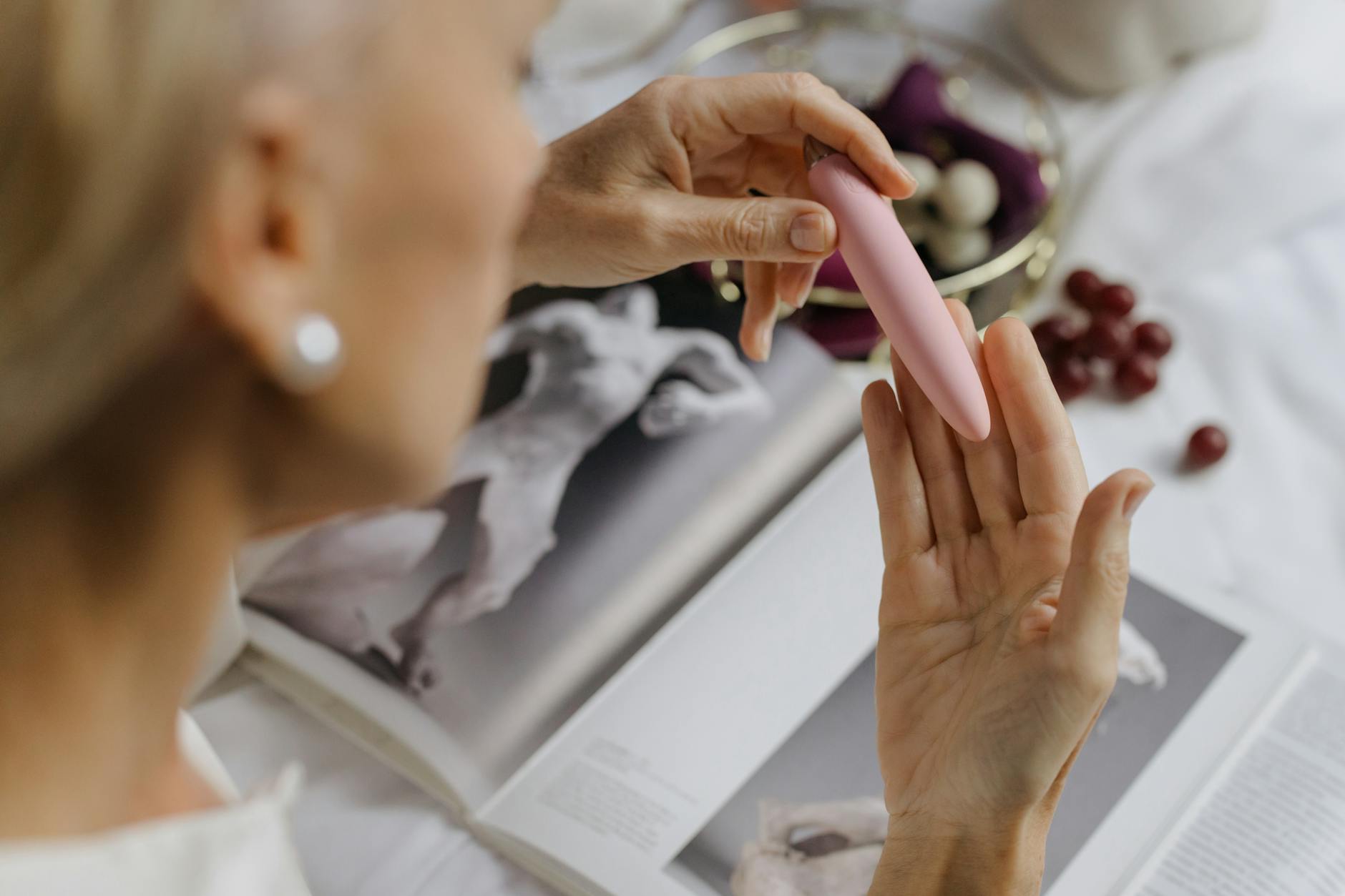
Here's what's different about using a lemon vibrator when anxiety is in the driver's seat: the suction-based stimulation of a device like the Lem works directly on your parasympathetic nervous system in a way that friction-based vibrators don't. This matters more than you'd think.
How anxiety hijacks arousal (the neuroscience part)
Your nervous system has two main modes. Sympathetic is your gas pedal. Parasympathetic is your brake. Anxiety keeps you stuck on the gas. Sex lives in the brake pedal.
When cortisol and adrenaline are running high, blood flow stays in your limbs and your thinking brain. The vulva becomes less engorged. The vagina stays dry. Your clitoris feels distant, numb, like it belongs to someone else. You might even feel physical pain because the muscles are contracted, not relaxed.
This creates a vicious loop: you feel anxious, so pleasure doesn't work, so you feel anxious about the fact that pleasure isn't working, which makes anxiety worse. After a while, you stop trying.
The gap between what your mind wants and what your body can deliver gets wider. That gap is where shame lives. And shame feeds anxiety.
Why suction is different when you're anxious
Most vibrators work through sustained friction. They require you to find the right angle, maintain pressure, and keep stimulation consistent. That's a lot of active thinking. When anxiety is present, active thinking is the enemy.
Suction-based stimulation, like what a lemon vibrator or Lem device delivers, works through a different pathway. The pattern of suction and release engages your nervous system in a rhythmic, predictable way. You don't have to orchestrate it. The device does the work. Your only job is to let it happen.
There's something deeply calming about that surrender. You stop performing. You stop monitoring. You let your body follow the rhythm instead of trying to lead it.
For people with anxiety, that's everything.
How to create the actual conditions for this to work
First: a lemon vibrator won't fix anxiety. But it can help your nervous system shift out of fight-or-flight long enough for pleasure to become possible again. That's not nothing.
Here's what I actually recommend:
Build in transition time
Don't go from scrolling your phone to pleasure in five minutes. Your nervous system can't make that shift. Spend 15 minutes doing something that genuinely calms you. Not meditation if meditation stresses you out. Something tactile. A warm shower. Dimming the lights and changing into clothes that feel soft. Drinking tea. Anything that tells your body the threat has passed.
Reduce decision-making
If you're anxious, your brain is already overloaded. Don't add choices. Set your space up ahead of time. Keep water nearby. Have lube ready. Charge the lemon vibrator the day before. When the moment comes, there's nothing to think about except sensation.
Use breath as the first tool
Before you even touch yourself, do box breathing. Four counts in, hold four, out four, hold four. Do this for two minutes. This literally activates your parasympathetic nervous system. Your heart rate drops. Your blood vessels relax. Your pelvic floor releases. Then start with the vibrator.
Start at the lowest setting
When you're anxious, intensity reads as threat. Start the Lem on pattern 1 or 2. Let your body get used to the sensation. You're not trying to come. You're trying to feel safe enough to stay present. Come later, after your nervous system has downshifted.
Build a body scan into the process
Before you use the vibrator, mentally scan your body from your feet upward. Where are you holding tension? Your shoulders? Your jaw? Your thighs? Consciously release each area. This is called somatic awareness. It rewires the disconnect that anxiety creates.
The partner conversation (if there is one)
If you're using a lemon vibrator with a partner, they need to understand that this isn't about them not being enough. It's about nervous system repair. Frame it that way.
The most helpful thing a partner can do is nothing. Seriously. Don't watch intensely. Don't offer commentary. Don't try to orchestrate. Be present, maybe with a hand on your arm or your back, but let the vibrator and your nervous system do the recalibration work.
Some couples find it helpful for the partner to use the Lem on them, which adds an element of trust and surrender. That works only if your anxiety is specific to performance or control. If your anxiety is generalized, you might need to establish solo pleasure first, then bring them in.
Talk about this before you're in the moment. Ask: what would make you feel safest?
When you need professional support
If anxiety around pleasure is severe, a lemon vibrator is a tool, not a fix. You might benefit from working with a sex therapist or a trauma-informed therapist alongside using the vibrator. EMDR, somatic experiencing, and cognitive behavioral therapy all have solid evidence for anxiety.
Some people find that low-dose medication (like SSRIs) actually helps by taking the edge off the baseline anxiety, which then allows pleasure to resurface. If you're on antidepressants and your libido has tanked, that's worth discussing with your prescriber. Sometimes adjusting the dose or timing helps.
The point is this: you don't have to white-knuckle your way through this alone.
Building back to spontaneous pleasure
Once you've done this a few times and your nervous system starts to trust the process, something shifts. The numbness begins to lift. You feel sensation earlier in the process. Arousal builds faster. The anxiety quiets down because your body has evidence that pleasure can happen safely.
Then you can experiment with using the Lem in different contexts. During partnered sex, instead of before it. With a longer warm-up. With less planning. With the pressure off entirely.
Overtime, many people find that the anxious loop actually reverses. Pleasure happens. Your body remembers it can feel good. Anxiety has less to attach to. Your nervous system recalibrates.
Anxiety is not permission to stop pursuing pleasure. It's information that your nervous system needs a different approach.
A note on self-compassion
Anxiety that blocks pleasure often comes with shame. You feel like you should be able to just relax and enjoy sex. Everyone else seems to. Why can't you? This thinking is a trap. It adds another layer of anxiety on top of the original anxiety.
Instead: your nervous system has reasons for doing what it's doing. Maybe stress, maybe trauma, maybe just your wiring. None of those are failures. They're just facts. A lemon vibrator, breathing, a partner who understands, and sometimes professional support can all help you recalibrate from there. But the recalibration starts with softness toward yourself, not judgment.
Your pleasure matters. Your nervous system matters. Taking the time to rewire this is worth it.
FAQ
Can anxiety cause clitoral numbness?
Yes. Anxiety and trauma both restrict blood flow to the genitals and cause dissociation from sensation. The clitoris doesn't feel numb because of the tissue itself. It feels numb because your nervous system has disconnected from that part of your body as a protective mechanism. This is fully reversible once you address the underlying anxiety.
Will using a lemon vibrator make the anxiety worse?
If you're pushing yourself into pleasure before your nervous system is ready, yes. That's why the setup matters so much. But if you follow the transition and grounding steps, a lemon suction vibrator typically has the opposite effect. The rhythmic stimulation is calming, not agitating.
How long does it take for anxiety-blocked pleasure to come back?
It depends on the source of the anxiety and whether you're addressing it in multiple ways. If you're using the vibrator but not addressing the underlying stress or trauma, progress is slower. If you're working with a therapist, using the vibrator, practicing grounding, and addressing root causes, many people notice a shift within 3-4 weeks.
Can I use the Lem if I'm on anxiety medication?
Absolutely. In fact, many SSRIs (antidepressants) actually make it easier to access pleasure once the baseline anxiety drops, even though the initial side effect is sometimes numbness. Using a lemon clitoral vibrator while on medication is safe and often more helpful than using one without medication, because your nervous system has more bandwidth to process pleasure.
Is it normal to feel emotional when pleasure comes back?
Completely normal. When you've been disconnected from sensation for a long time, the return of pleasure often brings grief, relief, joy, and sometimes tears all at once. You're re-inhabiting your body. That's emotional work. Let it be whatever it needs to be.
What if my partner's anxiety is blocking their pleasure?
The best thing you can do is what I mentioned earlier: don't perform. Don't try to fix it. Create the conditions for them to feel safe. Suggest they explore solo first if that feels comfortable. Offer to be present without expectation. If anxiety is severe, encourage them to work with a professional. Your job is support, not rescue.