
Let's name the real problem first
Your partner thinks toys mean they're not enough. Or toys feel clinical, performative, unsexy. Or they watched some outdated action film where vibrators are punchlines. Or maybe they had a parent who was sex-negative and it stuck. The reason doesn't matter right now. What matters is that you want clitoral stimulation and they're somewhere between "no thanks" and "absolutely not."
Here's what I see in my practice: this isn't actually a toy problem. It's a security problem wearing a toy costume. Once you separate those two things, everything changes.
Why partners resist (and why it's not about you)
Men, in particular, absorb a narrative from adolescence onward that their hands and body are supposed to be enough. Adding a vibrator feels like a critique. They don't think about it rationally. They feel it.
Women sometimes internalize the opposite: that wanting a toy means they're broken, or pushy, or too demanding. So they stay quiet and then wonder why intimacy feels flat.
Neither of these things is true. But they're both loud in people's heads, and they need addressing before the lemon vibrator even comes into the room.
Start the conversation outside the bedroom
Don't introduce a toy mid-intimacy. Don't leave one on the nightstand and hope they notice. Those tactics backfire because they feel like ambush.
Instead: pick a calm moment. Not during sex, not during conflict, not during a car ride when escape feels impossible. Something like a Sunday afternoon or over coffee. Say this, or something close to it:
"I've been thinking about our sex life. I really enjoy it, and I also want to explore something I think could feel amazing for both of us. I'm not saying anything is wrong. I just want to try something new."
Then pause. Let them respond. Don't barrel ahead with a sales pitch about clitoral vibrators.
If they say no immediately, you've got more work to do. If they say "okay, tell me more," you're in the right conversation.
Reframe it as something you do together, not something you need
Here's the language shift that matters. Instead of: "I want to use a vibrator when we have sex," try: "I want us to explore what happens if we use a vibrator together."
One sentence sounds like a solo project he's excluded from. The other sounds like an experiment you're running as a team.
Then get specific about the why. Not "I can't orgasm without one" (even if that's true, it triggers that security thing). Instead: "When I get clitoral stimulation, my orgasms feel different. I want to experience that with you."
You're positioning the vibrator as a tool that brings something to the experience for both of you, not a replacement for him.
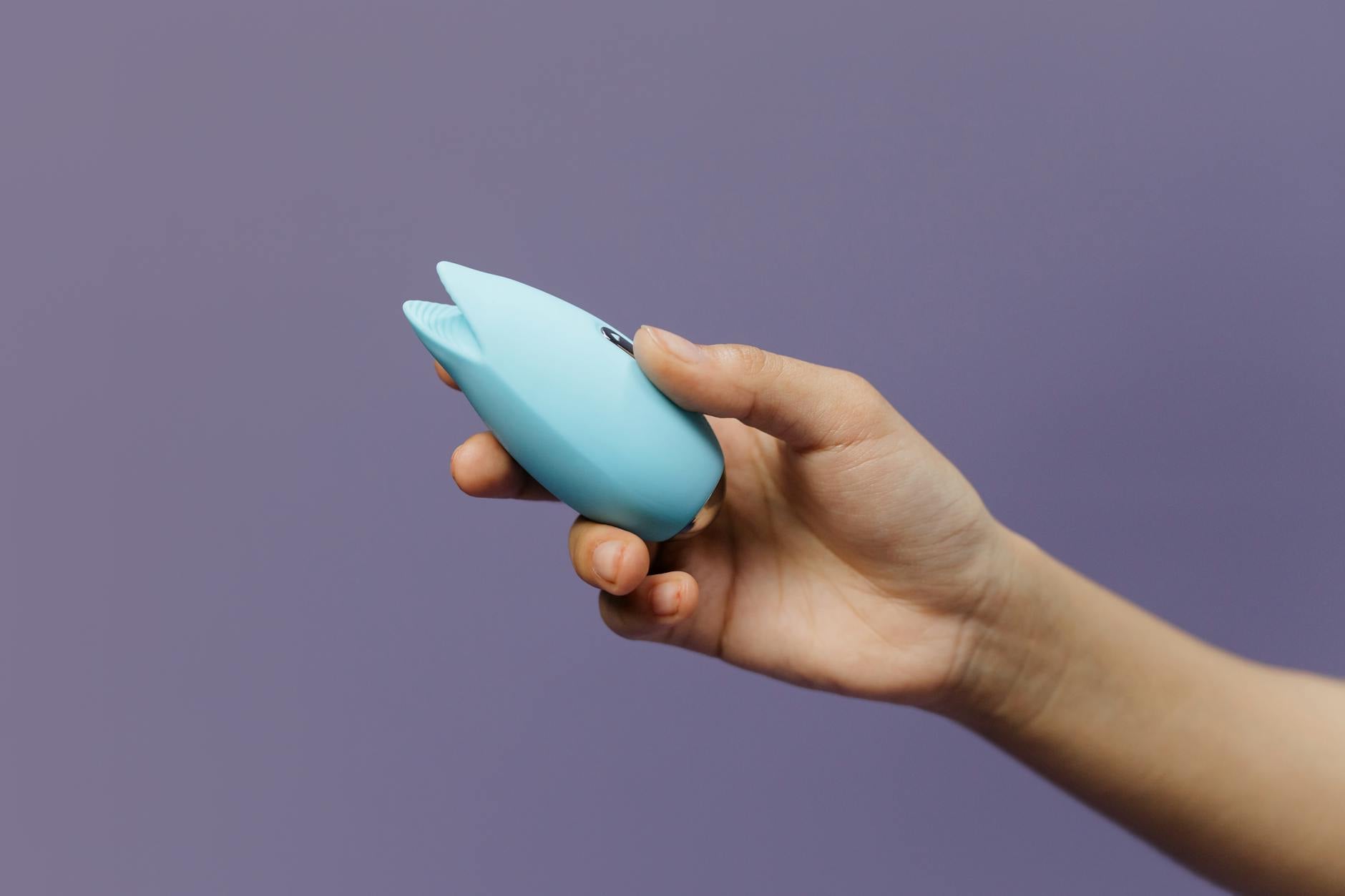
Photo by cottonbro studio on Pexels
Acknowledge what he might be feeling (without agreeing)
If he says something like "I feel like I'm not enough," don't dismiss it with "that's not true." Emotions aren't true or false. They're just there.
Instead: "I get why you might feel that way. That's not what I'm experiencing, but I hear it. Can we talk about that?"
Then listen. Actually listen. This might take more than one conversation. That's okay. The conversation itself is the intimacy. You're showing him that his feelings matter and that you want to move through this together, not around him.
Once he feels heard, his nervous system relaxes. That's when new ideas become possible.
Introduce the idea of watching or guiding first
Some partners will warm up faster if they feel in control of the introduction. Suggest he holds the toy, or chooses when you use it, or guides where it goes. Even if he's never touched a vibrator in his life, this gives him agency.
You might say: "What if you held it? That way you can control the pressure and the speed, and I can tell you what feels good."
This is not a small thing. He moves from spectator to participant. The vibrator becomes a tool he's using, not something that's replacing him.
Talk about what a clitoral vibrator actually does
Many partners think vibrators are for penetration or are some kind of intense, alien experience. They're not.
A lemon clitoral vibrator uses gentle suction and vibration on the clitoris. It doesn't require him to do anything differently. He can still be inside you. He can still be touching you. The vibrator is just adding a layer of sensation that often makes orgasms deeper and easier to reach.
Some partners find this genuinely sexy once they understand it. Others need to see it in action to believe it.
When you do introduce the actual toy, keep it matter-of-fact. This isn't your big moment of transformation. It's just a tool. Act like it's normal, because it is.
When resistance stays resistance
Sometimes partners dig in. They refuse to engage with the conversation. They get defensive. They make it about something else entirely.
At that point, you have a bigger problem than the toy. You have a communication problem or a respect problem. A vibrator won't fix that.
What might help: couples therapy. Not because anything is wrong with you, but because a good therapist can help you both understand why this particular boundary matters so much and how to navigate differences without one person's needs disappearing.
I've seen couples move through this. I've also seen couples where one person eventually chooses their own pleasure over the partnership's resistance. Both are valid paths.
The middle ground that actually works
Maybe he never wants you to use a vibrator during partnered sex. Okay. But what about solo time? What if you use a lemon clitoral vibrator on your own and he's not in the room? That might feel less threatening to him because it's not about his performance.
Or maybe the compromise is: you can use it during foreplay, but not during penetration. Or he can use it on you, but you don't use it yourself. Find the line where both people feel respected.
The best version isn't the one where he's suddenly enthusiastic about toys. It's the one where he accepts that your pleasure matters and isn't a threat to him.
What happens when he actually tries it
Once a partner gets over the initial resistance and actually engages, something often shifts. He realizes the toy doesn't make him redundant. If anything, it gives him information: now he knows exactly what rhythm and pressure makes you come. That's not weakness. That's knowledge.
Many partners end up incorporating toys into their regular routine once the shame lifts. Not because they suddenly love vibrators, but because they love what vibrators do for you. And they love being close to you while it happens.
That's the actual goal. Not the toy. Connection.
When you need permission to prioritize yourself
Here's what I want you to know: if you want clitoral stimulation, you deserve it. Not because he agrees. Not because he feels comfortable. Because your pleasure is valid and real and worth having.
Your partner's discomfort is real too. Both things can be true. But if his discomfort means your pleasure disappears, that's not a partnership. That's resentment training itself in slowly.
Sometimes the conversation with your partner needs to be: "I'm going to prioritize my own pleasure. I'd love your support. But I'm not waiting for your permission."
That might sound confrontational. In some relationships, it is. In others, it's the permission he needed to hear that you were serious. That your body and your satisfaction matter.
FAQ
What if he thinks I'm having an affair if I use a vibrator?
That's a fear about infidelity, not about toys. A vibrator is a device. It has no feelings and no agency. If he's worried you're emotionally invested elsewhere, that's a separate conversation about trust that needs addressing directly.
Can I use a lemon vibrator without him knowing?
You can. Solo pleasure is valid and private. But if intimacy is stalled because of his resistance to toys, sneaking around extends the problem. You're still not having the conversation.
How do I get him to initiate using a vibrator with me?
You can't want it more than he does. You can create conditions where he feels safe, supported, and secure. You can make it clear you're excited about it. But ultimately, he has to move toward it himself. If he never does, you get to decide what that means for your sex life and your relationship.
What if he agrees but just lies there while I use it?
That's progress and also not progress. He's agreed, which is something. But if he's checked out emotionally, you're not actually together during sex. Name that gently: "I feel like you're somewhere else right now. Can we talk about what that's about?"
Is there a specific clitoral vibrator that makes partners less resistant?
The Lemon clitoral vibrator is designed to be accessible and intuitive, which helps. But honestly, the toy doesn't matter as much as the conversation. A $15 vibrator with full enthusiasm beats a luxury toy with resentment behind it.
What if we've been married for 20 years and he suddenly refuses toys?
Something shifted. Maybe he's stressed. Maybe he's aging and his sexuality is changing. Maybe he heard something that triggered old stuff. Ask him, not accusingly: "Something feels different. Talk to me about what's happening."
The real conversation
Using a lemon vibrator when your partner resists isn't about the vibrator. It's about whether you both can hold space for the other person's needs even when they make you uncomfortable. It's about whether "no" is a hard boundary or an "I'm scared" wearing a hard boundary costume.
You can't control his response. But you can stay clear about what you need and kind about what he's feeling. That's where real intimacy lives, whether or not a toy is in the room.