Let's start with the honest part
Sexual trauma rewires your nervous system. It changes how your body responds to touch, how your mind predicts safety, and what pleasure even means. You're not broken. Your system is doing exactly what it's supposed to do: protecting you.
What makes recovery different from the other friction points in your life is that you can't just avoid sex forever and call it solved. Most people want to reclaim this part of themselves eventually. That desire is valid. And it takes real tools.
Why pleasure recovery feels so different
After trauma, your brain becomes hypervigilant. A sensation that should feel good can trigger a flashback. Touch that's meant to be intimate can feel invasive. Your body might freeze, dissociate, or respond with shame even though you cognitively know it's safe.
This is called post-traumatic stress response, and it's neurological, not psychological failure. Your amygdala (the threat-detection part of your brain) has been recalibrated. Healing means gradually, carefully, safely recalibrating it back.
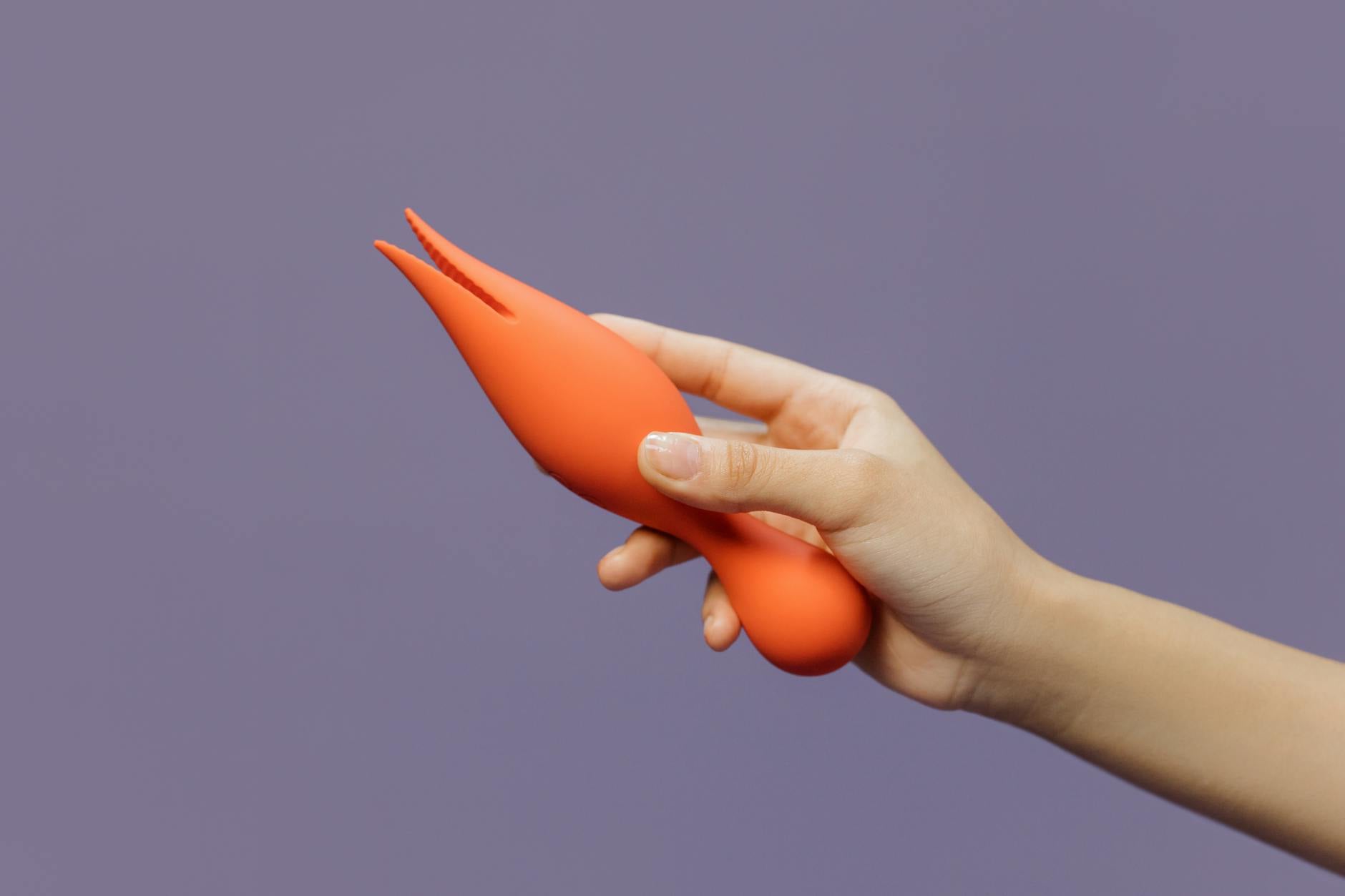
A tool like a lemon clitoral vibrator can help because it puts control entirely in your hands. No negotiation with a partner, no pressure to perform, no surprise. Just you, your body, and a device that responds exactly as you direct it.
Why control matters more than sensation
Trauma takes autonomy. Recovery rebuilds it.
When you use a vibrator alone, in a space you've chosen, at a pace you control, you're not just experiencing sensation. You're re-establishing the message to your nervous system that your body belongs to you. That you get to decide what happens to it. That pleasure isn't something someone else extracts from you. It's something you generate for yourself.
Many trauma survivors I work with report that the first orgasm after starting solo exploration with a lemon vibrator isn't primarily about physical sensation. It's about the mental reset: "I can do this on my terms. I'm not afraid. I'm safe."
That's the work happening beneath the surface.
Starting slowly, actually slowly
When I say start slow, I don't mean use the lowest setting. I mean: start by holding the lemon vibrator without turning it on. Just get used to its weight in your hand. Its texture. Its temperature. Spend a few days (or a week) doing only this.
Then, turn it on but don't use it yet. Let it vibrate in your hand. Notice the sound. The rhythm. How your nervous system responds to those cues.
Next, let it touch your thigh or your forearm. Not your genitals. Somewhere low-stakes. Build the association between the sensation and safety, not between the vibrator and pressure to feel something.
This isn't wasted time. This is where your nervous system learns: "This object is here because I chose it. It does what I tell it to do. It stops when I say stop."
That's the foundation everything else is built on.
When you move to genital touch
Some people skip the earlier steps and go straight here. That's fine if it feels right. Some people need weeks of the non-sexual exploration first. Both are normal.
When you do start using your lemon clitoral vibrator on your genitals, the same principle applies: your pace, your control. Start with the lowest pattern. You might use it for 30 seconds and stop. That's complete. You did the thing.
Many trauma survivors find that suction-based vibrators like the Lem feel safer than direct vibration because the sensation is gentler and more diffuse. There's less of a shock to your nervous system. You can stay present more easily.
If at any point during solo exploration you feel a flashback coming, dissociation setting in, or your body freezing up, stop immediately. This isn't failure. This is your nervous system telling you it needs more time or a different approach.
Managing intrusive thoughts during pleasure
You might be stroking your clitoris with your lemon vibrator and suddenly find yourself in a memory, or spiraling into shame, or feeling like you're "supposed" to be enjoying this more. That's incredibly common, and it doesn't mean you're doing it wrong.
When intrusive thoughts appear, the instinct is to push through and keep going. Don't. Put the vibrator down. Breathe. Come back to your body in the present moment.
One grounding technique that works well for many people: feel the surface you're sitting on. Notice the temperature of the room. Listen to three distinct sounds around you. Name the color of something near you. These small sensory anchors pull you out of the memory and back into now.
Then, if you want to continue, continue. If you don't, you're done. Both are victories.
The role of a trauma-informed therapist
Solo exploration with a lemon vibrator can be a powerful part of healing, but it's not a replacement for professional support.
A trauma-informed therapist (specifically someone trained in EMDR, somatic experiencing, or trauma-focused CBT) can help your nervous system process the trauma itself, not just work around it. They can help you understand your triggers, your dissociation patterns, and what actual safety feels like in your body.
If you're recovering from sexual trauma and considering adding solo pleasure back into your life, a therapist should ideally be part of that conversation. They can help you distinguish between "this is uncomfortable but okay" and "this is triggering a trauma response."
When you're ready to involve a partner
This is a later chapter, and it comes only if and when you want it.
If you reach a point where you want to reintegrate partnered sex, tell your partner explicitly what helps you feel safe: what you need them to check in, what pace works, what words or touches you want to avoid. Don't assume they'll intuit it.
One thing that often helps: use the lemon vibrator together, but with you in control. Your partner's hand doesn't have to be on you. They can be present next to you, watching, as you explore yourself. This lets them participate without you losing autonomy.
Managed vulnerability. That's what partnered healing can look like.
What recovery actually looks like
It's not linear. Some weeks you'll feel ready and grounded. Other weeks a random smell or sound will send you back. That's not backsliding. That's how healing works in a body that's been traumatized.
Some people who use a lemon vibrator as part of their recovery process find that it becomes their primary source of pleasure indefinitely, and that's perfectly fine. Others use it as a stepping stone toward other kinds of intimacy. Both are complete paths.
The goal isn't to get back to who you were before. You've been changed by what happened. The goal is to integrate that experience and reclaim agency over your own pleasure, your own body, your own life.
That's the work. A lemon vibrator is just one small tool that makes it possible.
Common questions about vibrators and trauma recovery
Can using a vibrator re-traumatize me?
It's possible if you push too fast or if you're not in a regulated nervous state beforehand. This is why starting slow isn't optional. If you find that the vibrator is triggering distress consistently, pause and talk to your therapist. Some people need more processing before solo exploration feels safe. That's not failure. That's wisdom.
What if I can't feel anything physically?
Numbness is a trauma response. Your nervous system has dampened sensation to protect you. This usually improves over time with consistent safe experiences, therapy, and sometimes medication adjustments if you're on anything that dampens sensation. A lemon vibrator might help because the sensation is stronger than your fingers alone, making it easier to feel something. If nothing registers after several attempts, talk to your therapist or doctor.
Can my partner help me with this process?
Yes, but only if you want them to and only in ways you explicitly invite. Many people find that having a partner present (without touching, without pressure) can help them feel safer during solo exploration. Others need complete solitude. Neither is wrong. Your nervous system gets to decide.
How long does trauma recovery take?
It depends on the severity of the trauma, whether you have professional support, and your own nervous system's capacity to process. Some people feel significantly better in months. Some take years. And healing isn't permanent elimination of symptoms. It's reaching a point where the trauma has less control over your daily choices.
Is it normal to feel guilty about wanting pleasure after trauma?
Very normal. Trauma often bundles pleasure with danger, and shame with survival. Your guilt is your nervous system's old programming, not truth. Pleasure is a normal, healthy part of being alive. Healing means untangling it from shame.
What if I have flashbacks while using the vibrator?
Stop immediately. This doesn't mean you've done something wrong or that you can't ever try again. It means your nervous system needs more preparation or a different approach. Talk to your therapist about what happened. There's usually a smaller, safer step you can take first.
You don't have to rush
Recovery from sexual trauma isn't a race toward getting back to normal sex. It's a slow, careful rebuilding of your relationship with pleasure, your body, and trust.
Some days that means holding your lemon vibrator and doing nothing with it. Some days it means using it for 20 seconds. Some days you skip it entirely. All of that is part of the process.
Your nervous system is learning, incrementally, that pleasure can exist without danger. That your body is yours. That you're safe. Those lessons take time, but they're worth every moment.