Best Lemon Vibrator for Partners Exploring Together
The conversation about toys doesn't have to feel like a rejection of your partner. Here's how to introduce a lemon vibrator as a shared experience, not a threat.
One partner brings it up. The other person hears it as "you're not enough" or "something's wrong with me." Even if nobody says that out loud, it's humming underneath the conversation. This is the part nobody tells you about couples and toys. It's not the logistics that get messy. It's the meaning you both attach to the idea.
I've worked with dozens of couples navigating this exact moment. The ones who move forward together, without resentment or performance anxiety, do something specific. They separate the physical choice from the emotional one.
When you introduce a lemon vibrator into a partnership, you're not just adding a tool to your sex life. You're making a statement about what you want together. If that statement gets tangled up in shame or inadequacy on either side, the vibrator becomes a symbol of something broken instead of something fun.
Here's what I see happen: Partner A mentions they want to try something new. Partner B immediately feels like they're not satisfying Partner A. Partner A then feels guilty for bringing it up at all. By the time anyone discusses the actual vibrator, the conversation has already derailed into a fight about worth.
The fix is not about picking the right lemon vibrator or watching instructional videos (though those help). The fix is having a conversation that's actually about desire, not about fixing a problem.
Start here: "I want to explore something together, not because anything's wrong, but because I'm curious." That's different from "I need this to get off" or "You're not doing it right."
Then listen to what your partner hears. They might be thinking: "Does this mean I'm not enough?" Address that directly. "I love what we do. I'm interested in this because you're here with me, and I want to share something new."
If your partner brings up a lemon vibrator or lemon clitoral vibrator first, your job is simpler. Don't defend yourself or assume they're disappointed. Ask genuine questions: "What made you interested in this?" "What are you curious about?" "What would feel good to you?"
Most of the time, your partner is looking for permission to explore, not a performance upgrade. They want to know it's safe to want new things without losing you.
This is where couples often go wrong. They pick something online and surprise their partner with it. That can backfire because the vibrator itself becomes a symbol of something done to someone rather than with them.
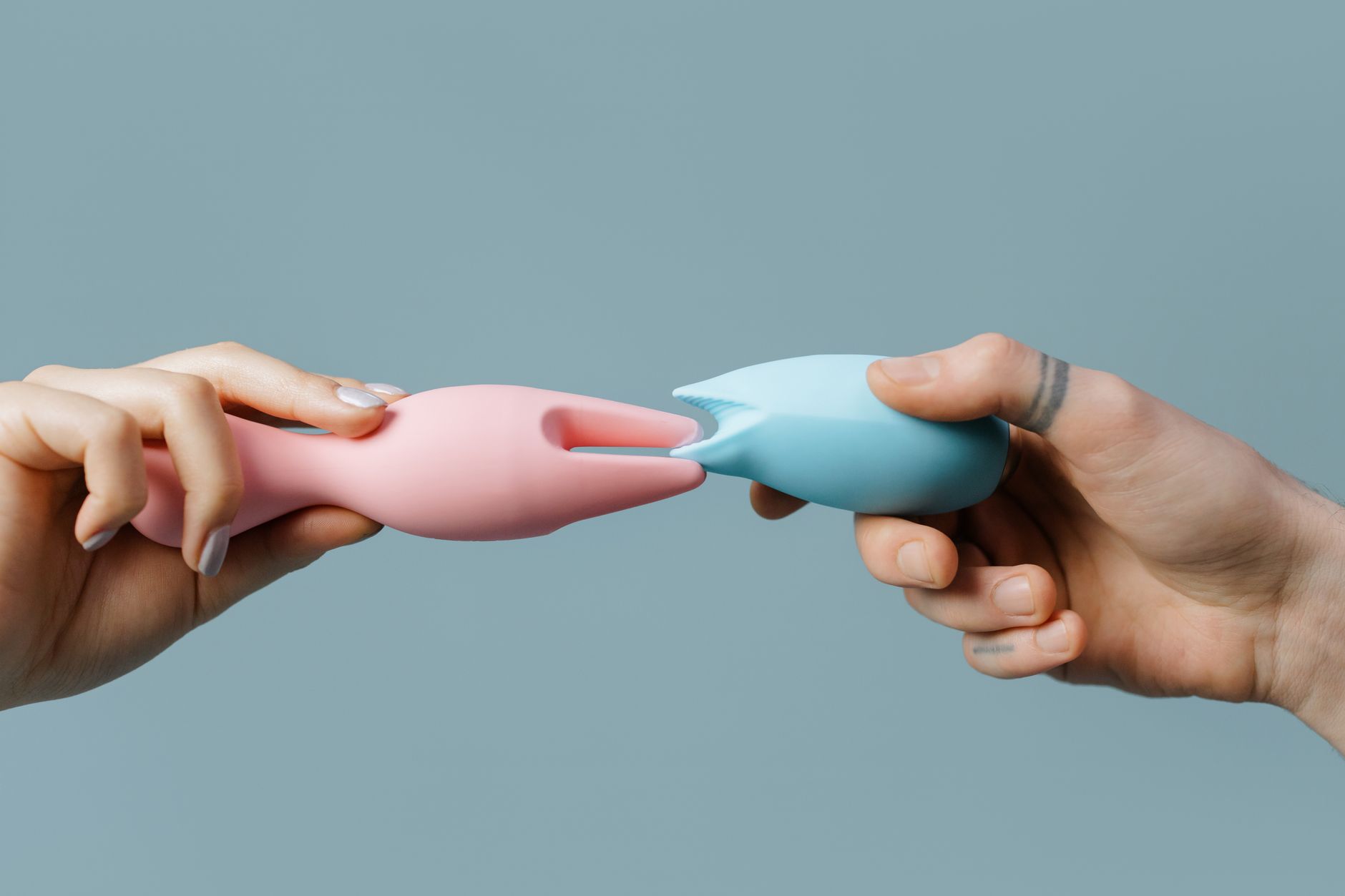
Better approach: browse together. Make it playful, not clinical. Look at options. Talk about what appeals to you. A lemon clitoral vibrator like the Lem works well for couples because it's intuitive to use, visually simple (not intimidating), and the suction technology doesn't require the same direct pressure as other vibrators. That matters because it takes pressure off both people. Nobody's working as hard.
Photo by cottonbro studio on Pexels
Talk about what you each want the experience to feel like. Do you want it to be playful? Sensual? Do you want to experiment together or use it as foreplay leading into partnered sex? These questions matter more than the vibrator itself. The tool is secondary to the intention.
Pressure kills pleasure. So your first time using a lemon vibrator as a couple needs zero expectations attached.
Start with something low: "Let's just explore this together and see what feels good. No goal, no finishing line."
If you're the partner receiving: communicate. Tell your partner what feels good, what intensity works, what rhythm you like. This is not the time to pretend you're enjoying something you're not. Honesty builds trust.
If you're the partner holding the vibrator: watch and listen. You're not trying to prove anything. You're just present and paying attention to what your partner responds to. That's actually more intimate than most partnered sex gets.
Take the first time seriously, but not too seriously. If something feels awkward, name it. "This angle isn't working, let me adjust." If the intensity is too much, say so. If you're both laughing at the novelty of it all, that's fine. That's actually a good sign. Sex with someone you trust can be playful.
Sometimes one person is really into the idea and the other is skeptical. That's normal. You don't need to convince a skeptical partner. You need to make it safe for them to be curious.
If your partner is hesitant, here's what usually helps: "We don't have to use it tonight. I just want to have it available if you ever want to try it." That removes the pressure to perform enthusiasm they don't have yet.
Show them it's not a big deal. Use it alone sometimes and mention casually that you enjoyed it. Let curiosity develop naturally instead of pushing it. People are more willing to explore when they feel like they chose it, not like they were talked into it.
If your partner says "I don't want this in our sex life," listen to that. Resentment builds when you ignore a boundary. But also ask why. Sometimes people worry about specific things: cost, complexity, that it means something about their desirability. Those are often solvable. Sometimes it's a genuine incompatibility. That's solvable too, just differently.
Using a lemon vibrator together often opens up conversations about what you each want. That can feel vulnerable. You might realize your partner wants things you didn't know about. You might realize you've been holding back desires of your own.
That's actually good, even if it's uncomfortable. The vibrator becomes a gateway to honesty instead of a tool for performance. When couples use a toy as a way to explore together, they're usually also exploring themselves and each other.
The deeper shift is this: introducing a lemon sexual toy that you both feel comfortable with means you're choosing to be curious instead of closed. That ripples into the rest of your intimacy.
If the conversation about toys keeps turning into a fight, that's information. It usually means the toy itself isn't the issue. There's something about desire, worth, or safety in your relationship that needs attention.
That's not a sign you should abandon the idea. It's a sign that a therapist or counselor who specializes in couples' intimacy could help you understand what's really being negotiated. The vibrator is just the presenting issue.
Couples who successfully introduce a lemon vibrator together usually report that the experience itself is secondary to what it opened up. They felt less alone in their curiosity. They learned something new about what their partner enjoys. They had permission to want things without shame.
That's the actual win. Not the orgasm. Not the novelty. The permission.
Your partner exploring pleasure with you, rather than hiding it or resenting you for it, is what makes a long-term relationship work. A lemon clitoral vibrator is just the tool that makes that conversation possible.
Frame it as curiosity, not criticism. Say "I've been curious about trying this together because I like exploring with you" rather than "I need something different." Timing matters too. Have the conversation outside the bedroom, when you're both calm. Listen to their concerns without getting defensive. Often insecurity comes from assumptions, not facts. Ask what they're worried about and address it directly.
Yes. The Lem works well for couples because the suction technology is intuitive and doesn't require intense manual friction from the partner holding it. It feels less intimidating than other vibrators for people who've never used one. The design is also straightforward, which helps if someone feels awkward about the mechanics.
That worry is worth naming directly. Most of the time, a partner using a toy is about expanding pleasure, not replacing you. A vibrator can do one specific thing well. It can't replicate the full experience of intimacy with a real person. If you're genuinely worried about desire mismatch in your relationship, that's a separate conversation worth having with a therapist. The vibrator itself isn't the threat.
Yes. Water-based lube makes the experience more comfortable and helps the vibrator glide smoothly. It also reduces any potential friction that might feel uncomfortable if someone's clitoris is sensitive. Apply it before you start, and you can add more if needed. This removes performance pressure because you're not trying to generate lubrication through arousal alone.
Wait until you're both calm and out of the moment. Say something like "I really liked when we..." or "That didn't feel as good as I expected because..." The goal is information, not criticism. You're learning what works for both of you. If something didn't feel good, that's useful data, not a failure. Keep it practical and curious.
Awkwardness is normal. You're doing something new together. Some awkwardness usually passes once you both relax. If it didn't feel good, you don't have to do it again. But also consider whether the awkwardness was about the tool or about vulnerability. Sometimes the discomfort is actually about opening up to your partner, and the vibrator just happens to be the vehicle. That's worth exploring together.
I've worked with couples who introduced toys into their sex life in their 30s, 40s, and beyond. The ones who do it successfully almost always report the same thing: we thought the tool was the point, but it was actually the conversation. Using a lemon vibrator together became permission to want more, to ask for more, to be curious without shame.
That's available to you too. It just requires one of you to be brave enough to say "I'm curious" and the other to hear it as an invitation, not a rejection.
If you're ready to explore but unsure how to start, consider reaching out to a relationship coach or therapist who specializes in intimacy. Sometimes having a professional affirm that curiosity is healthy makes the whole conversation easier. You deserve a partnership where desire is something you share, not something you hide.